Every packaging line starts with a question that rarely gets much attention: how does the product actually reach the machine that fills the bag? Material conveying equipment is the answer, and in our experience building packaging and conveying systems for food, pharmaceutical and chemical plants, it is where most of the practical headaches live — and where most of the easy wins hide too.
Below we have put together the practical view we share with customers during the early design stages: what the main conveying options are, how to match one to your material, and what to check before you sign off on a layout.
What Material Conveying Equipment Really Does
In simple terms, conveying equipment moves bulk material between stages of a process — from a sack tip station or silo to a hopper, from floor level to the top of a vertical form-fill-seal machine, or from one building to another. It is not glamorous work, but it sets the rhythm of everything downstream.
Conveying systems fall into two broad families. Mechanical systems use a physical element to carry the product: buckets on a chain, a belt, a rotating screw, a vibrating trough. Pneumatic systems use air, either pulling the material with vacuum or pushing it with pressure through pipework. Both approaches have loyal users, and both have situations where they are clearly the wrong tool.
The reason it matters so much is consistency. A filling machine can only be as accurate as the feed it receives. If material arrives in surges, the weighing or volumetric dosing will drift, film waste rises, and operators start chasing faults that actually begin twenty metres upstream.
The Main Types and Where Each One Fits
Most plants we visit are choosing between a handful of familiar options. The table below is the comparison we usually sketch on a whiteboard during the first meeting.
A practical comparison of common conveying methods and the duties each one handles best.
| Type |
Best for |
Typical role in a packaging line |
Points to watch |
| Bucket elevator |
Vertical lift of granules, pellets and small solids |
Floor to overhead hopper, feeding weighers |
Cleanout access, chain tension, cross-contamination |
| Belt conveyor |
Horizontal or gentle inclines, packed goods |
Transfer between machines, bag and carton handling |
Tracking, spillage, product degradation |
| Screw or auger |
Powders and fine granules over short distances |
Metering feed into a dosing hopper |
Buildup, flight wear, dust generation |
| Vibrating conveyor |
Fragile, hot or sticky products |
Gentle transfer, spreading feed across a weigher |
Noise, tuning, limited incline |
| Pneumatic system |
Powders over long or complex routes |
Silo to line, multi-point distribution |
Energy use, filtration, product attrition |
If you are specifically looking at vertical transport, there is a longer write-up on the workhorse of vertical material transport that goes into construction details and capacity calculations.
Matching the Conveyor to What You Are Moving
The single most common mistake we see is choosing equipment by price or by catalogue capacity, then discovering the product behaves differently in real life than it did in the sample bag.
Granules and pellets
Bulk density, angle of repose, friability and abrasiveness all change the answer. Salt, coffee beans and plastic pellets can look similar on a specification sheet but behave very differently in a bucket elevator. Abrasive products eat through mild steel flights and chute liners, while friable ones produce fines that clog filters and upset weight control.
Powders
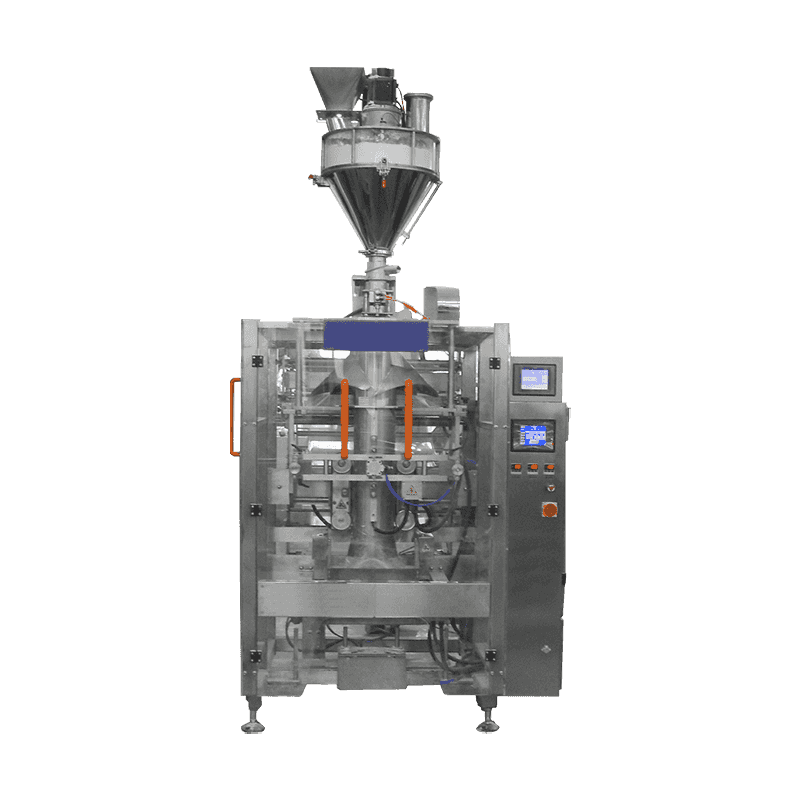
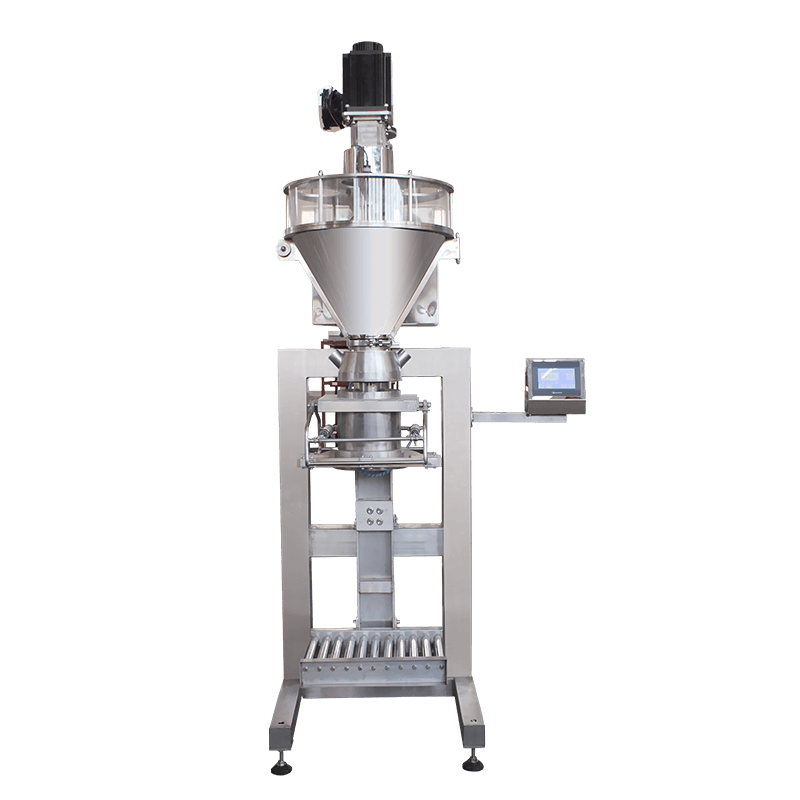
Powders bring dust, aeration, caking and static into the conversation. Hygroscopic products absorb moisture and bridge in hoppers; fine organic dusts need proper sealing, earthing and filtration. This is why we often pair a powder filling machine with a feed system designed around the same assumptions — the 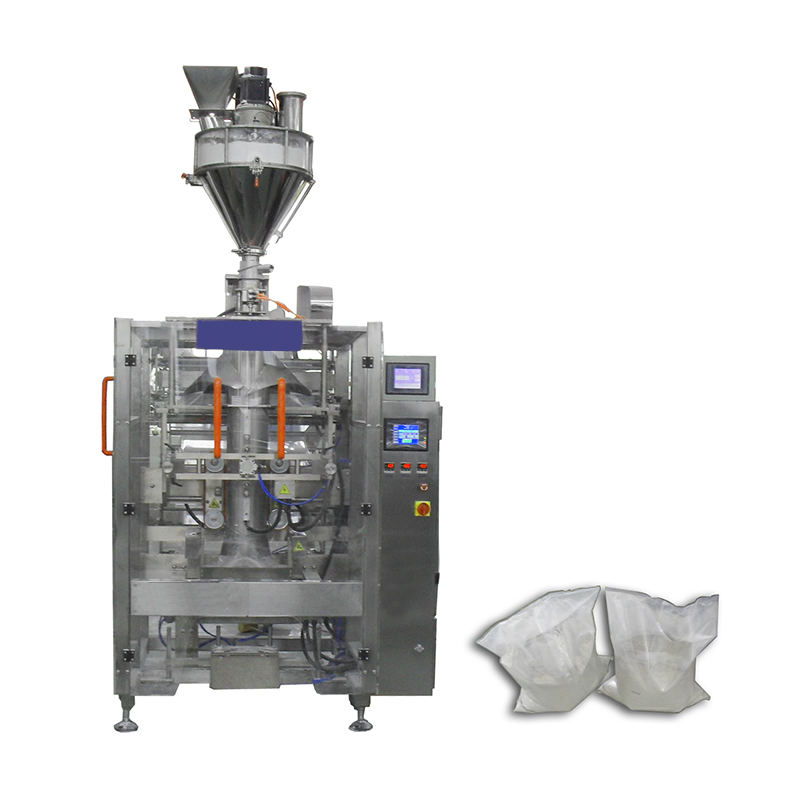 MP-5000F/7300F/1100F Automatic Powder Packaging MachineAutomatic auger-weighing powder packaging system with optional anti-static and dust extraction, integrating bag forming, filling, sealing, printing and counting for dusty powders.View Product → is a good example of a unit built with static and dust control in mind, and it performs best when the conveying stage is designed to the same standard.
Liquids
Liquids are usually pumped rather than conveyed, but the same principle applies: stable, air-free feed produces stable fills. Level control and line sizing deserve as much attention as the filler itself.
Where Conveying Sits in a Complete Packaging Line
A conveying system is rarely bought on its own. It is the bridge between receiving and filling, and later between filling and cartoning, case packing or palletising. Getting that bridge right usually means answering four questions early:
- What throughput do you need at peak, not just on average?
- How much vertical lift is available, and where can the equipment sit?
- What cleaning regime does the product and the auditor demand?
- Who controls the line, and how do the machines interlock?
For vertical lift duties, a chain drive unit such as the 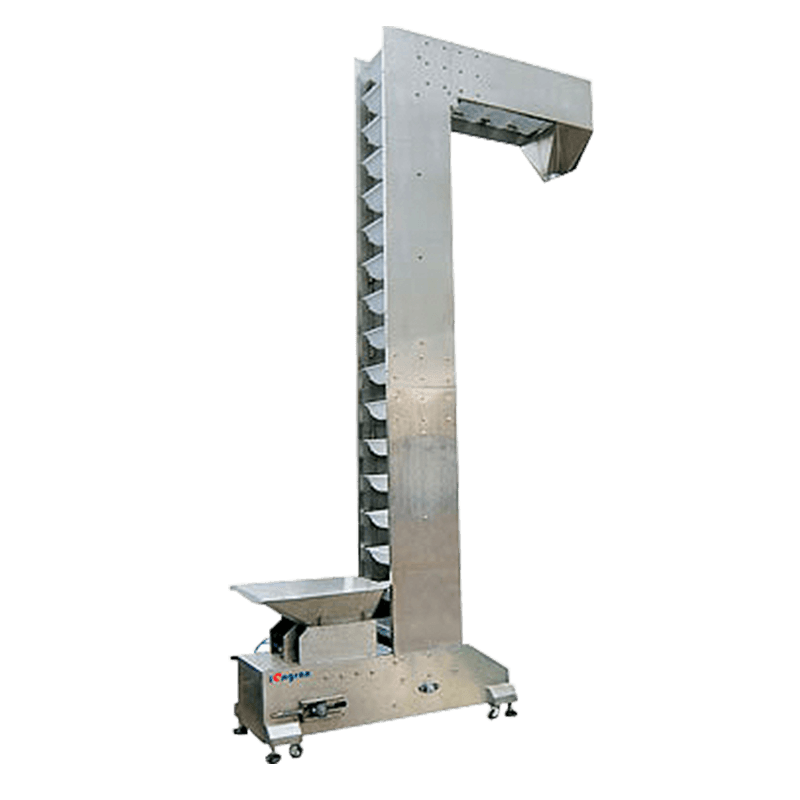 DT-5 Chain Drive Bucket ElevatorChain-driven vertical elevator for small blocks and granular materials, with stainless-steel construction and food-grade plastic contact parts for food, feed and chemical handling.View Product → is a workmanlike choice: it handles granular products at a steady rate and slots neatly between a floor-level feed point and an overhead hopper. What matters most is that the discharge height, boot design and inspection openings are agreed with the packaging machine supplier before either unit is built, not after both arrive on site.
Checks Worth Doing Before You Commit
Over the years we have built a short checklist that saves a lot of rework. None of it is exotic, but skipping any one item tends to surface later as an expensive retrofit.
- Test the actual product, not a representative sample. Send the awkward batch — the one that cakes, the one with fines, the one from the new supplier.
- Confirm capacity at the feed point, not at the discharge. Losses, spillage and recycle streams add up.
- Agree on cleaning access. If an operator cannot reach the boot or the last metre of pipework, cleaning will be skipped.
- Plan dust and static control from the start, especially for powders and solvent-bearing products.
- Define the control philosophy: start-stop sequencing, level sensors, interlocks and alarms.
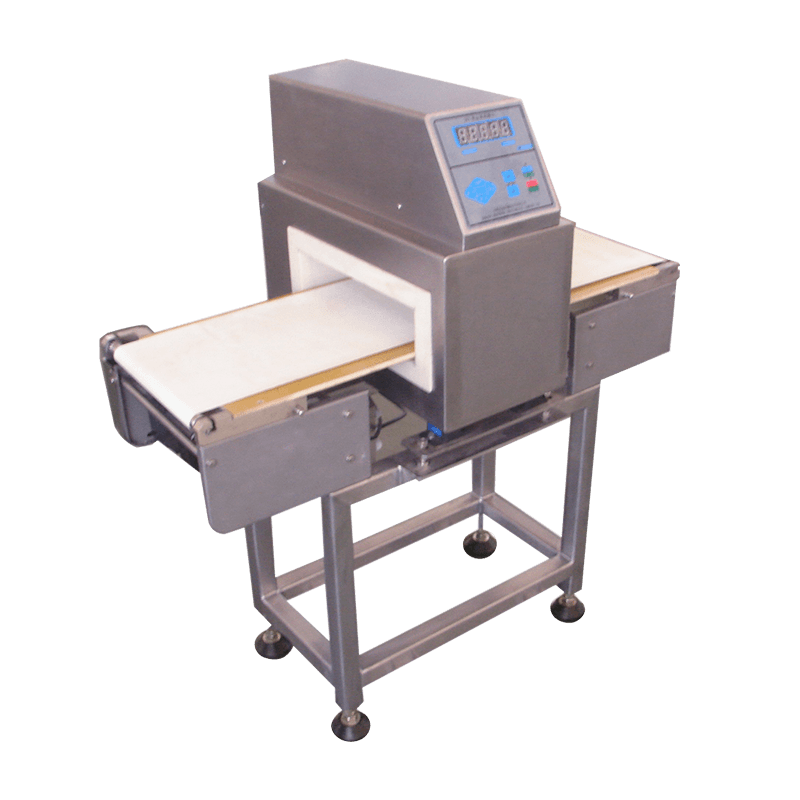
- Decide how quality checks will be handled. Conveying and inspection belong in the same conversation, and a metal detector or checkweigher placed at the wrong point in the flow creates bottlenecks rather than protection.
Weight verification is a good illustration. The 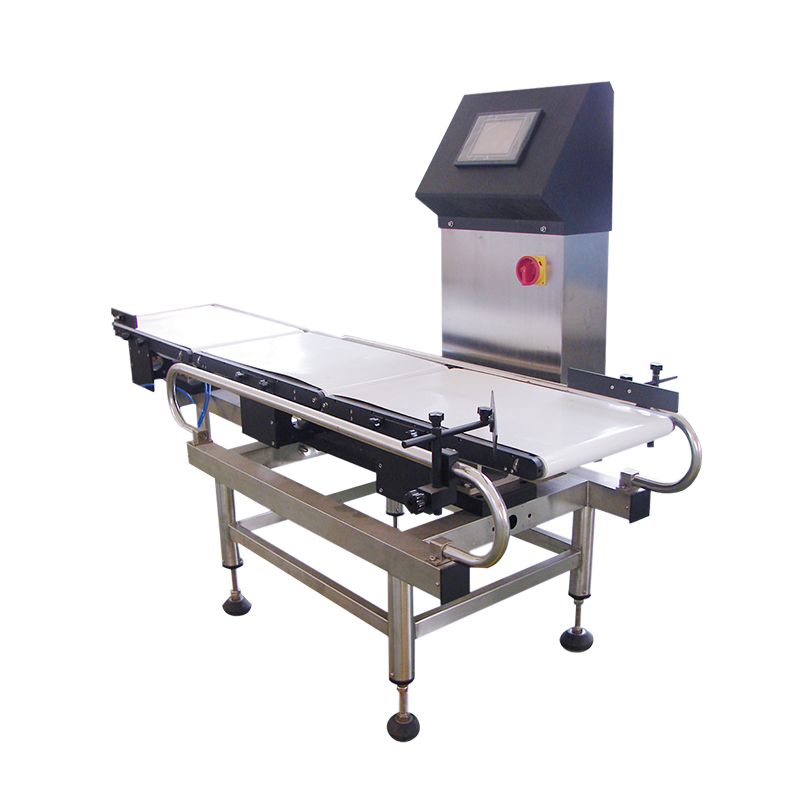 MP-CJB Series IP66 Automatic Weight Check and Rejection SystemInline dynamic weighing and rejection system with IP66 washdown protection and touch-screen parameter storage, helping maintain consistent pack weight on automated production lines.View Product → is designed to sit in-line and reject out-of-tolerance packs, but it can only do that reliably if the packs arrive at a consistent spacing and speed — which is a conveying decision, not a weighing one.
Keeping It Running Day After Day
Conveying equipment is mechanically simple, which is both its strength and its trap. Because it looks after itself, maintenance gets postponed. In practice, a few habits keep a system healthy for years: check chain tension and bucket fixings on a fixed schedule, inspect wear liners and screw flights for thinning, empty and clean boot sections before product changeovers, and watch filter differential pressure on pneumatic systems rather than waiting for a blockage.
It also pays to record what normal sounds and looks like. Most failures we are called about were audible for a week beforehand.
Material conveying equipment will never be the most talked-about part of a packaging line, but it quietly determines whether the rest of the investment performs. If you are planning a new line or replacing a feed system that has never quite behaved, we are always happy to talk through the layout, the product and the awkward details — that conversation usually saves more money than any specification sheet.


 English
 Español
 عربى


Contact Us