Buying packaging equipment rarely feels like buying a machine. It feels like rearranging a production day. A new filler changes how fast the line runs, where operators stand, how much film or bag stock you keep, and how often maintenance walks past. After enough installations, you stop seeing equipment as a shopping list and start seeing it as a sequence of decisions that have to fit together.
What follows is a practical walk through the categories, the material questions that drive selection, and the details that usually surface only after commissioning.
What Packaging Equipment Actually Covers
The term is broad enough to be unhelpful. In practice, the machines on a production floor fall into a handful of groups, and knowing which group you are buying from keeps the conversation honest.
- Primary packaging — the machine that forms, fills and seals the package the consumer or the next process stage receives. Vertical form-fill-seal units, vacuum packers and liquid fillers live here.
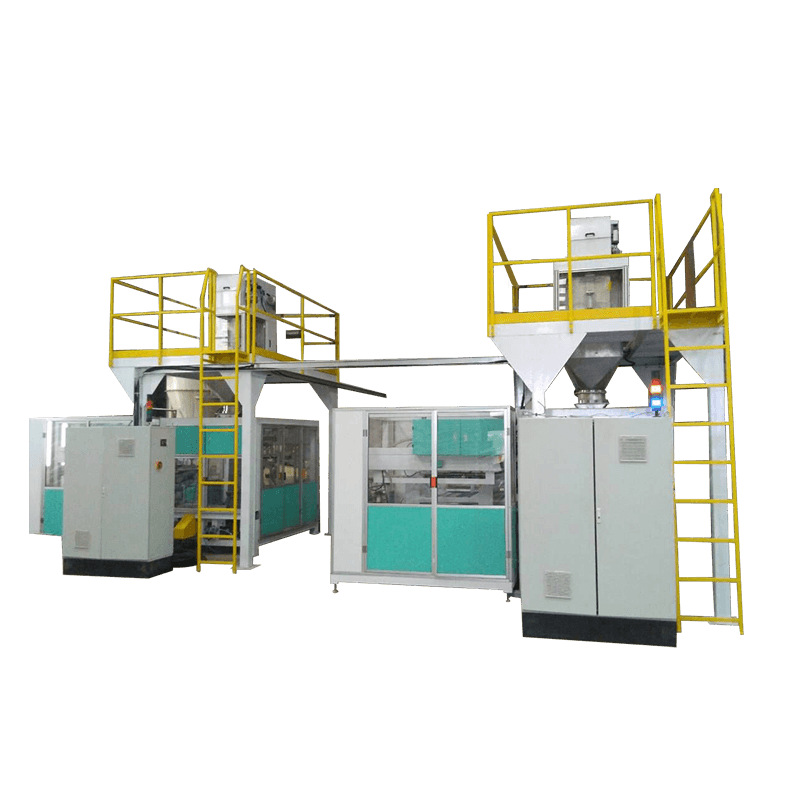
- Secondary packaging — cartoning, small-bag collation, heavy bag and ton bag stations, where finished units are gathered into a larger format.
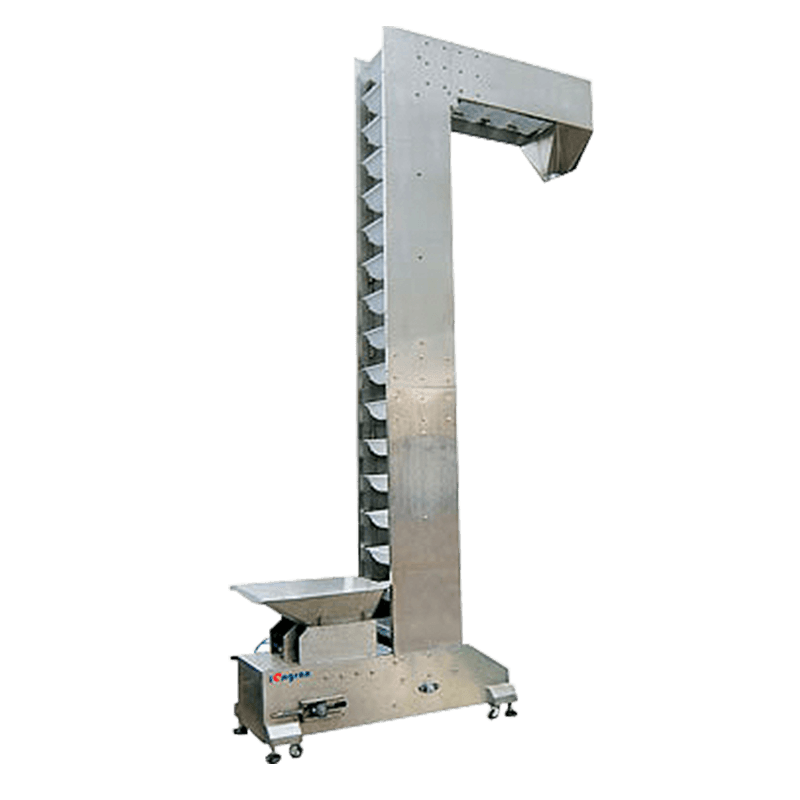
- Material conveying — bucket elevators and feeding systems that move product upward and into the dosing head without manual handling.
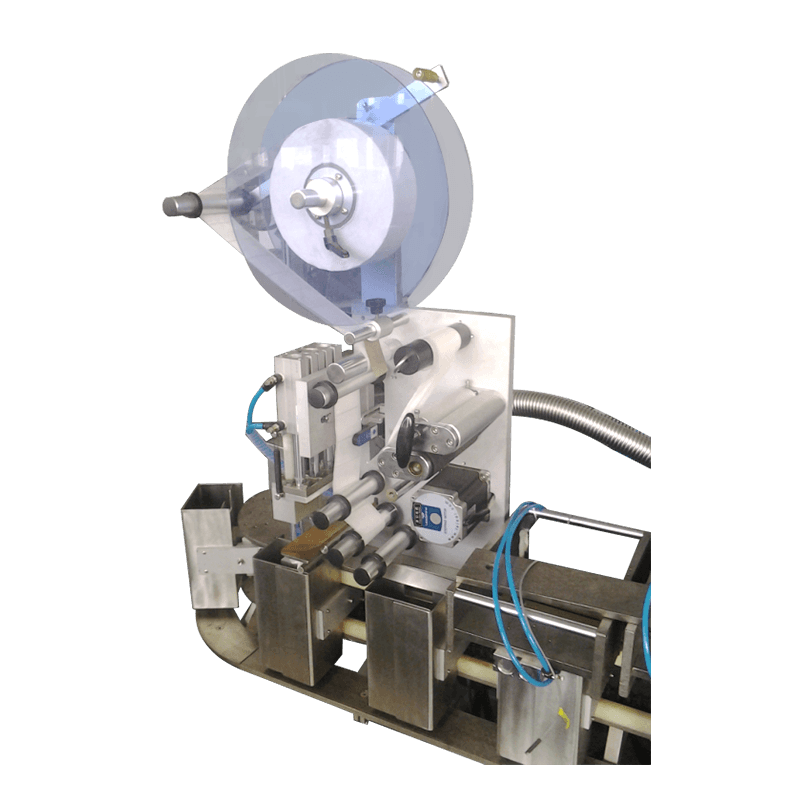
- Inspection and identification — checkweighers, metal detectors, printers and labelers that catch problems and mark what passed.
- End of line — palletizing robots and the handling that turns a stack of boxes into a shippable pallet.
A single machine and a full line are not different products so much as different scopes of the same project. That distinction matters more than any spec sheet headline.
Matching the Machine to What You Are Packing
Material form decides the dosing principle long before brand or budget enters the room. A cup filler and an auger filler can be built on the same frame and still behave very differently on a Tuesday afternoon when humidity climbs.
Material form usually drives the dosing method, and dosing drives everything downstream of it.
| Material form |
Typical primary equipment |
What deserves attention |
| Granules — salt, sugar, seeds, pellets |
Cup or auger-fed vertical form-fill-seal, vacuum packer |
Accuracy at speed, dust generation, seal quality on the finished bag |
| Powders — flour, milk powder, chemical additives |
Auger dosing vertical form-fill-seal, vacuum powder unit, valve bag filler |
Anti-static control, dust extraction, access for cleaning between batches |
| Liquids and pastes |
Vertical liquid packing machine with piston or gravity fill |
Temperature control, drip-free filling, seal integrity under load |
| Bulk and heavy loads |
Heavy bag line, ton bag station, automatic valve bag weigher |
Weighing range, bag handling, dust at the filling spout |
Take fine-grained salt as an example. Speed is only half the story; the cup volume has to stay consistent while the machine runs continuously, and the bag has to leave the jaw clean enough to survive transport. A high-speed cup quantitative machine is engineered around exactly that trade-off.
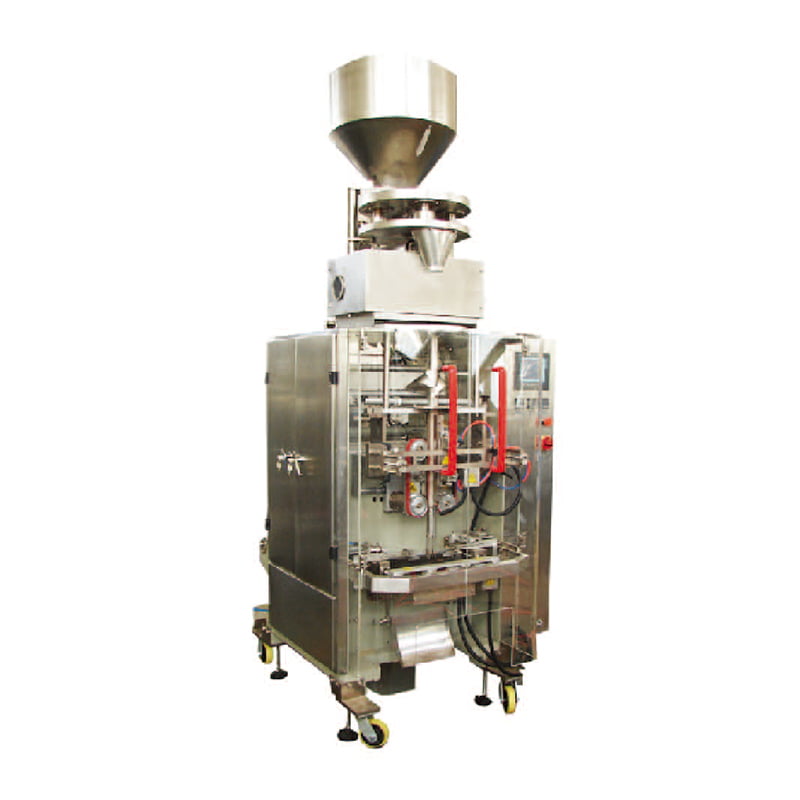 MP-5000DS High-Speed Cup Quantitative Packaging MachineDesigned for fine granular materials such as salt, this automatic cup-metering system combines dosing, bag-making and sealing at 30–70 bags/min.View Product →
From One Machine to a Working Line
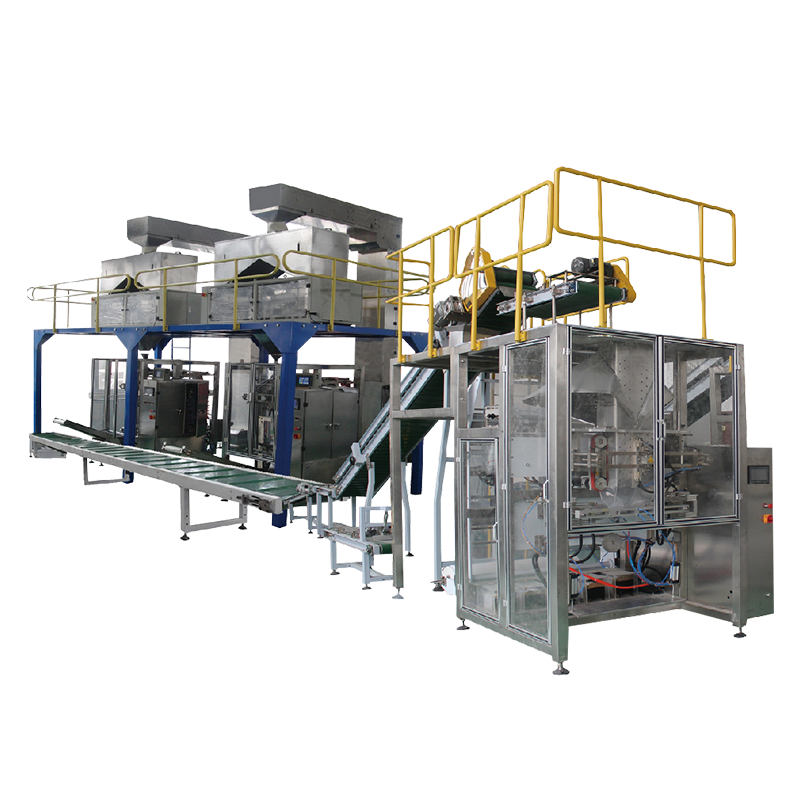
Most factories start with a bottleneck rather than a blueprint. That is fine, as long as the first purchase does not quietly block the second one. A typical sequence looks like this:
- Product arrives at the dosing point, often lifted by a chain drive bucket elevator rather than carried by hand.
- The primary machine forms, doses and seals the package.
- Checkweighing and metal detection confirm the package is complete and clean before it goes any further.
- Printing and labeling apply the batch code, date and traceability information.
- Collation, cartoning, heavy bag filling or ton bag loading prepares the shipment format.
- Palletizing moves the finished cases without a forklift weaving through the packing area.
Inspection equipment sits in the middle of that chain, but it belongs in the planning conversation from the beginning. Retrofitting a checkweigher into a line that was never laid out for one costs more than sizing it correctly the first time, and stainless-steel construction with high ingress protection saves a great deal of grief in washdown areas.
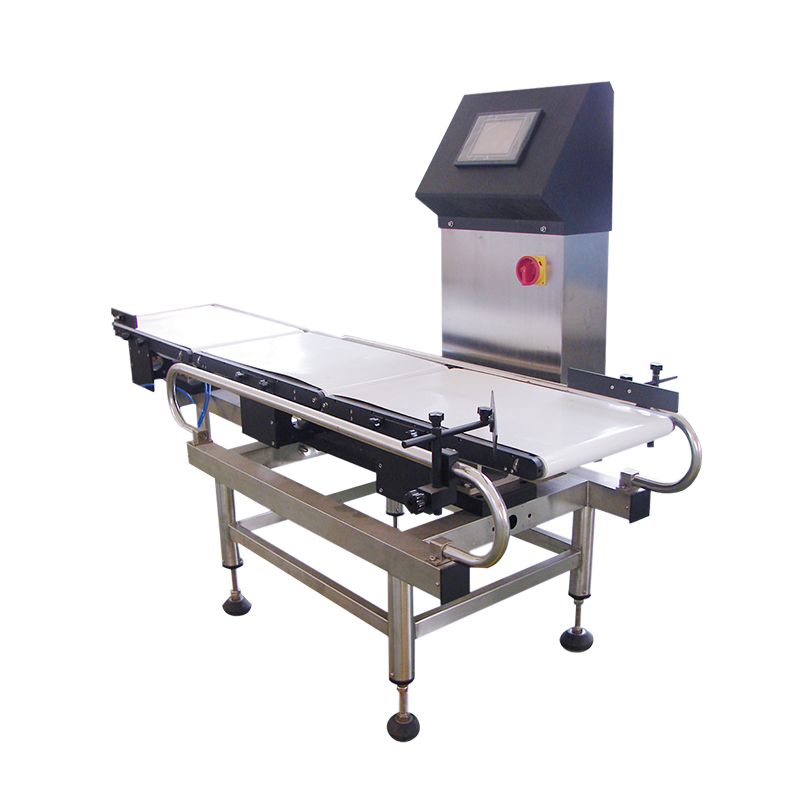 IP66 Automatic Weight Check and Rejection SystemThis IP66-rated online checkweigher identifies and rejects out-of-spec items, supports multiple stored weight settings and is built for easy washing.View Product →
Dust, Hygiene and the Details That Surface Later
Powder is where good intentions go to settle on horizontal surfaces. A machine that fills accurately in a trial run can still coat the surrounding frames within a shift, and that dust becomes a cleaning burden, a slip hazard and, in some products, a genuine safety question.
Three features tend to separate equipment that ages well from equipment that fights its operators. The first is dust removal built into the filling zone rather than added as an afterthought. The second is anti-static treatment, because fine powders cling, bridge in hoppers and refuse to fall where the dosing screw expects them to. The third is cleaning access — can the auger, the forming tube and the sealing jaws be reached without dismantling half the machine?
Food and pharmaceutical buyers usually add a fourth: material and surface finish. Modular stainless-steel construction and smooth, coved joints are not cosmetic upgrades. They shorten changeover, reduce residue and make sanitation verification considerably easier to defend during an audit.
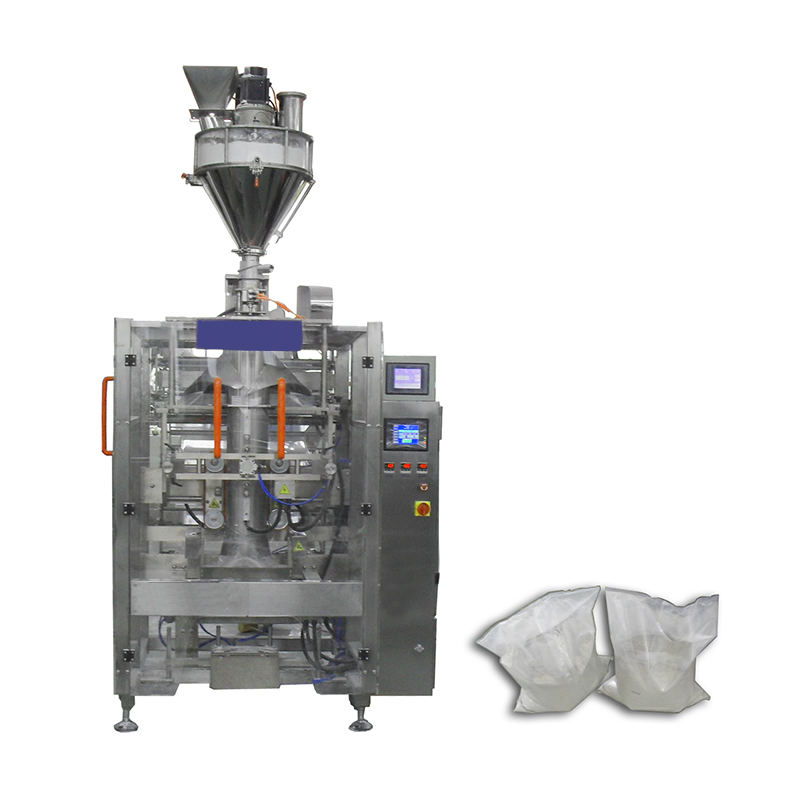 MP-5000F/7300F/1100F Anti-Static Powder Packaging MachineFor dusty powders, this automatic auger-filling system combines weighing, bag forming and sealing, with optional anti-static and dust-extraction support for cleaner operation.View Product →
Choosing Without Overbuying
Start with the bag, not the brochure
Bag format, film structure and finished pack dimensions constrain the machine far more than a target speed figure. A line rated for impressive output on a favourable film can disappoint on the laminate you actually buy. Bring samples, not descriptions.
Then define the honest output
Average output across a shift, including changeovers and cleaning, is the number that pays for the equipment. Peak output is a specification. Both are worth writing down, and both should be tested on the same material you intend to run.
Leave room for the next stage
Whether you plan a full packaging production line or a single machine today, position it where a conveyor, a checkweigher or a cartoner could join later. Future-proofing is mostly about space and utilities, not extra electronics.
What to Expect from a Manufacturer
An equipment supplier should be able to talk about your product before talking about price. That means asking about bulk density, angle of repose, hygroscopicity, bag material and downstream handling, then matching a dosing principle and a frame size to those answers.
At Anhui Mach Packing Machinery, we have spent years building machines for granules, powders, liquids and heavy bags, along with the conveyors, checkweighers, metal detectors, printers and palletizers that surround them. Our equipment is designed to international quality standards, and much of what we know has come from customers who told us plainly what did not work in their plant. If you want a longer technical grounding before a specification meeting, our deep dive into packaging equipment covers the mechanics in more detail.
The right packaging equipment is rarely the fastest or the most automated. It is the machine that fits your material, survives your cleaning routine and still makes sense when the line around it grows. Get those three right, and the specification sheet becomes a confirmation rather than a gamble.


 English
 Español
 عربى


Contact Us