Why Choosing the Right Liquid Packaging Machine Matters More Than You Think
Packaging machines for liquids are not a one-size-fits-all category. A machine designed to fill thin, free-flowing water at 1,000 bottles per hour will perform poorly — or fail entirely — when asked to fill a thick, viscous sauce or a carbonated beverage with dissolved gas. The physical properties of a liquid, the container format you're filling into, the production volume you need to sustain, and the hygiene standards your industry requires all interact to determine which liquid packaging equipment is right for your operation. Getting this decision wrong means investing tens of thousands of dollars in equipment that either underperforms, requires constant downtime for adjustments, or produces unacceptable levels of spillage and waste.
This guide walks through every major category of liquid packaging machine, explains the filling technologies behind them, and gives you a practical framework for matching the right equipment to your specific product and production environment — whether you're a startup launching your first beverage, a food manufacturer scaling up sauce production, or a chemical company packaging industrial cleaning fluids.
Types of Packaging Machines for Liquids by Container Format
The first dimension to understand when evaluating liquid packaging equipment is the container format — because the machine architecture is fundamentally different depending on whether you're filling rigid bottles, flexible pouches, cartons, sachets, or bulk containers. Each format requires a different handling system, sealing method, and filling approach.
Bottle and Jar Filling Machines
Bottle filling machines are the most widely used category of liquid packaging equipment across food and beverage, pharmaceutical, personal care, and household chemical industries. They handle rigid containers — glass bottles, PET plastic bottles, HDPE jugs, and wide-mouth jars — moving them along a conveyor line through filling, capping, labeling, and coding stations. Inline bottle filling machines position nozzles directly above containers that travel in a straight line, making them easy to clean and adjust and well-suited to production runs with multiple SKUs or frequent changeovers. Rotary filling machines move containers on a rotating carousel for much higher throughput — commercial beverage operations filling millions of units per day rely on rotary systems capable of 200 to 1,500+ containers per minute.
Pouch and Flexible Bag Filling Machines
Liquid pouch packaging machines fill flexible stand-up pouches, flat pouches, or spouted pouches with liquid products and heat-seal the opening closed. They are widely used for juice drinks, sports beverages, sauces, baby food, pet food in liquid form, and liquid detergents, where the flexible format offers retail appeal, lower material cost per unit, and reduced shipping weight compared to rigid containers. Premade pouch filling machines take pre-formed pouches from a magazine, open them, fill them via a nozzle, and seal the top. Form-fill-seal (FFS) machines form the pouch from a roll of flat film, fill it, and seal it in a continuous automated process — delivering higher throughput and lower per-unit material cost than premade pouch systems at the expense of greater machine complexity.
Sachet and Single-Dose Liquid Packaging Machines
Liquid sachet packaging machines produce small, single-serve or single-dose sealed packets of liquid — ranging from ketchup and soy sauce sachets in foodservice to pharmaceutical single-dose liquid medications, travel-size shampoo sachets, and water sachets common in developing market distribution. These machines form a continuous tube of laminate film, fill it with precise liquid doses, and seal horizontally across the tube at each dose interval to create individual sachets in a continuous web. Production speeds range from 30 sachets per minute on small benchtop machines to 600+ sachets per minute on high-speed industrial lines.
Carton and Tetra-Style Filling Machines
Gable-top cartons, brick-style aseptic cartons, and similar formats require specialized liquid packaging equipment that erects the carton blank, fills it under controlled conditions, and seals the top closure. Aseptic carton filling machines — the technology behind long-life milk, juice, and soup packaging — operate in a sterile environment where both the product and the packaging material are sterilized before filling, enabling room-temperature shelf lives of 6 to 12 months without refrigeration or preservatives. These are high-capital, high-throughput systems used by large food and beverage manufacturers rather than small-scale producers.
Drum, IBC, and Bulk Liquid Filling Machines
At the industrial end of the spectrum, bulk liquid filling machines fill large containers — 20-liter jerricans, 200-liter drums, and 1,000-liter intermediate bulk containers (IBCs) — with industrial liquids, chemical products, lubricants, edible oils, and bulk food ingredients. These machines typically use weight-based or volumetric filling with large-diameter nozzles and are built for the physical demands of handling heavy containers and high-viscosity or corrosive liquids. Throughput is measured in containers per hour rather than per minute, but fill accuracy and containment of hazardous materials are the primary performance criteria.
Liquid Filling Technologies: How Each Type Works and When to Use It
Beyond the container format, the filling technology built into the machine determines accuracy, suitability for different liquid viscosities, sanitation capability, and maintenance requirements. Understanding the main filling technologies helps you evaluate whether a machine's filling method is appropriate for your specific product.
Volumetric Piston Filling
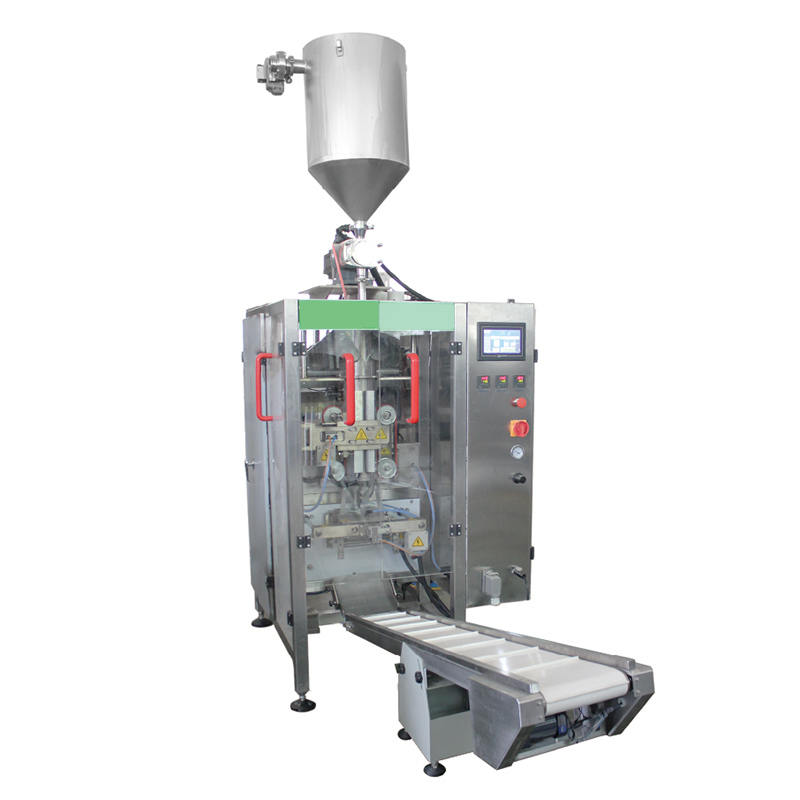
Piston fillers use a cylinder and piston mechanism to draw a precise measured volume of liquid from a product reservoir and push it into the container. They are exceptionally accurate across a wide range of fill volumes and handle both thin, free-flowing liquids and highly viscous products — including chunky products with small particulates — better than most other filling technologies. Piston fillers are the standard choice for sauces, dressings, creams, gels, oils, and similar products. They are straightforward to clean and change over between products and are available in configurations ranging from single-head benchtop models for startups to 16-head or 32-head inline machines for high-volume production.
Overflow Filling
Overflow fillers fill each container to the same level regardless of slight variations in container volume — a significant advantage for transparent glass or PET bottles where a visually consistent fill line is important for retail presentation. The nozzle dives below the container's neck, the liquid fills to a predetermined level, and any excess is drawn back out through a return channel. Overflow filling is ideal for thin, low-viscosity liquids such as water, juice, wine, spirits, mouthwash, and cleaning solutions but is not suitable for viscous, foamy, or carbonated products.
Gravity Filling
Gravity fillers use the weight of the liquid column in an elevated product tank to drive filling through a time-controlled or level-controlled valve. They are the simplest and lowest-cost filling technology, well-suited to thin, non-carbonated, non-foamy liquids in low-to-medium volume production environments. Wineries, craft distilleries, juice producers, and water bottlers at small to medium scale frequently use gravity filling systems for their low cost, easy sanitation, and gentle product handling. Fill accuracy is lower than piston or flow meter filling, making gravity fillers less appropriate for high-value products where overfill waste is costly.
Flow Meter Filling
Flow meter fillers use electronic flow meters — most commonly electromagnetic flowmeters for conductive liquids or Coriolis mass flow meters for precise mass-based filling — to measure the exact quantity of liquid dispensed into each container. They deliver very high fill accuracy (±0.1% to ±0.5%) across a wide range of flow rates and are particularly valuable for expensive or precisely dosed products like pharmaceutical liquids, premium spirits, industrial chemicals, and edible oils. Flow meter systems require no mechanical adjustment when changing fill volumes — the target quantity is simply reprogrammed — making them efficient for multi-SKU operations with frequent changeovers.
Pressure Filling and Counter-Pressure Filling
Carbonated beverages — beer, sparkling water, carbonated soft drinks, hard seltzers — require counter-pressure filling technology to prevent CO2 from escaping during the fill process. Counter-pressure fillers pre-pressurize the container with CO2 before filling, then fill the liquid at a matched pressure to maintain carbonation levels. The technology is more complex and significantly more expensive than systems for still liquids, but it is non-negotiable for carbonated product integrity. Craft breweries typically start with manually operated counter-pressure bottle fillers before graduating to semi-automatic or fully automated counter-pressure rotary systems as volume grows.
Peristaltic Pump Filling
Peristaltic pump fillers use rotating rollers that squeeze a flexible silicone tube to create a gentle, pulsed pumping action that moves liquid from the reservoir to the container without the liquid ever contacting the pump mechanism — only the interior of the sanitary tube. This makes peristaltic filling ideal for pharmaceutical liquids, nutraceuticals, laboratory reagents, and any product where cross-contamination or product contact with metal or mechanical components is unacceptable. Tube replacement is the only maintenance requirement. Fill volumes are adjusted by changing pump speed and cycle duration, and accuracy is typically ±1% for standard applications.
Comparing Liquid Filling Technologies Side by Side
The table below summarizes how the main filling technologies compare across the criteria that matter most for equipment selection:
| Filling Technology |
Best For |
Viscosity Range |
Fill Accuracy |
Relative Cost |
Carbonated? |
| Piston |
Sauces, creams, oils, chunky products |
Thin to very thick |
±0.5–1% |
Moderate |
No |
| Overflow |
Water, juice, spirits, cleaners |
Thin only |
Level consistent |
Low–Moderate |
No |
| Gravity |
Wine, water, juice (small scale) |
Thin only |
±1–3% |
Low |
No |
| Flow Meter |
Oils, spirits, pharma, chemicals |
Thin to medium |
±0.1–0.5% |
High |
No |
| Counter-Pressure |
Beer, carbonated beverages, soda |
Thin only |
±0.5–1% |
High |
Yes |
| Peristaltic Pump |
Pharma, nutraceuticals, lab liquids |
Thin to medium |
±1% |
Moderate |
No |
Key Specifications to Evaluate When Comparing Liquid Packaging Machines
Once you've identified the right filling technology and container format for your product, the next step is evaluating the specific performance specifications of the machines in your shortlist. These are the numbers and ratings that separate a machine that will meet your production requirements from one that won't — regardless of how similar two pieces of equipment may look in a brochure.
Filling Speed and Throughput
Filling speed is stated as containers per minute (CPM) or containers per hour (CPH) and should be evaluated against your actual production requirements with a safety margin of at least 20–30% headroom. A machine running at 100% of its rated capacity continuously has no buffer for the brief stoppages, speed adjustments, and changeover time that occur in any real production environment. If you need to produce 5,000 bottles per shift, a machine rated at 60 CPM gives you exactly zero buffer — target a machine rated at 80–100 CPM minimum. Also verify that the stated speed is achievable with your specific product viscosity and container size, not just with water in an ideal test configuration, which is how many manufacturers generate their headline speed figures.
Fill Volume Range and Changeover Flexibility
If your product line includes multiple SKUs at different fill volumes — for example, 250 ml, 500 ml, and 1,000 ml bottles of the same product — verify the machine's minimum and maximum fill volume range and the ease of changeover between volumes. Modern liquid filling machines with servo-controlled piston drives or electronically adjusted flow meters can switch between fill volumes with a menu selection and no mechanical adjustment, taking two to five minutes. Older mechanical systems may require manual adjustment of piston stroke length, volume cups, or timing settings, adding 30–60 minutes of downtime per changeover. For operations running multiple SKUs daily, the difference in changeover time has an enormous cumulative impact on available production hours over a year.
Construction Materials and Sanitation Standards
Any liquid packaging machine destined for food, beverage, dairy, or pharmaceutical use must be constructed from food-grade materials throughout all product-contact surfaces. This means 304 or 316L stainless steel for tanks, nozzles, fill heads, and product pathways; food-grade PTFE, silicone, or UHMW-PE for seals and gaskets; and a machine frame design that avoids horizontal surfaces where liquid and debris can accumulate. Machines intended for clean-in-place (CIP) operation must have smooth, crevice-free internal surfaces and ports for connecting CIP cleaning circuits. Pharmaceutical applications require machines validated to GMP (Good Manufacturing Practice) standards, with documentation packages supporting regulatory submissions.
Level of Automation and Integration
Liquid packaging equipment is available across a wide spectrum of automation levels, from manual benchtop machines operated entirely by hand to fully automated lines with robotic container handling, vision system inspection, and MES (Manufacturing Execution System) data integration. Semi-automatic machines require an operator to place containers under nozzles and activate each fill cycle — suitable for small-scale or artisan producers filling a few hundred units per day. Automatic inline machines handle container feeding, filling, and exit conveyance without operator intervention once running — appropriate for productions of 1,000 to 10,000+ units per shift. Fully integrated monoblock systems combine filling, capping, and labeling in a single compact unit — ideal for medium-scale operations that want to minimize floor space, reduce inter-machine transfer losses, and limit the number of separate systems to maintain.
Industry-Specific Requirements for Liquid Packaging Equipment
The industry you operate in shapes the specific compliance, hygiene, and performance requirements your liquid packaging machine must meet — often in ways that significantly narrow the field of suitable options.
Food and Beverage
Food and beverage liquid packaging equipment must comply with FDA food contact regulations in the United States, EU food contact material regulations in Europe, or equivalent national standards elsewhere. Machines must be designed for effective cleaning and sanitation — either manual COP (clean-out-of-place) disassembly or CIP circuits — to prevent microbial contamination between production runs. Hot fill capability is required for products filled at 85–95°C for pasteurization purposes, which demands heat-resistant seals and product pathways. HACCP plan documentation for the packaging process is increasingly required by major retailers and food safety certification bodies such as BRC, SQF, and IFS.
Pharmaceutical and Nutraceutical
Pharmaceutical liquid packaging machines must meet significantly more stringent standards than food equipment — operating under GMP guidelines, validated to demonstrate consistent performance within specification limits, and documented with Installation Qualification (IQ), Operational Qualification (OQ), and Performance Qualification (PQ) protocols. Fill accuracy requirements are tighter (typically ±0.5% or better), and batch traceability through integrated coding and serialization systems is often a regulatory requirement. Equipment for sterile liquid pharmaceuticals must operate in classified cleanroom environments and may require RABS (Restricted Access Barrier Systems) or isolator containment for the filling zone.
Chemical and Industrial Liquids
Packaging machines for industrial and household chemical liquids — cleaning agents, lubricants, adhesives, agricultural chemicals — must be constructed from materials compatible with the specific chemicals being filled, which may be corrosive, flammable, or reactive. ATEX-rated (explosion-proof) electrical components are mandatory for machines filling flammable or solvent-based liquids in Europe and their equivalent in other jurisdictions. Containment of spills and overfills through drip trays with drainage is a safety and environmental compliance requirement. Chemical filling operations frequently use weight-based net weight filling rather than volumetric filling, since the density of chemical products can vary with temperature in ways that affect volumetric accuracy.
How to Choose a Liquid Packaging Machine: A Practical Decision Framework
With so many machine types, technologies, and specifications to evaluate, a structured decision process prevents you from being overwhelmed by options and helps you reach a well-reasoned shortlist efficiently. Work through these questions in order:
- What is your liquid's viscosity? Measure it — don't estimate. Thin water-like liquids (under 100 cP) open up most filling technologies. Thick products (500–50,000+ cP) narrow the field to piston fillers, gear pumps, or specialized high-viscosity systems. Products with particulates require large-bore nozzles and piston or rotary valve filling.
- What container format will you use? Rigid bottles, flexible pouches, sachets, and cartons require fundamentally different machine architectures. Confirm your packaging format before evaluating any specific machine.
- What fill volume range and accuracy do you need? Define minimum and maximum fill volumes and the required accuracy tolerance. High-value products, regulated pharmaceuticals, and products sold by declared net weight require tighter accuracy than bulk commodity liquids.
- What is your required throughput? Calculate your daily production target and add 30% overhead for changeover, cleaning, and minor stoppages. This gives you the minimum CPM rating to specify when requesting quotes.
- What are your hygiene and regulatory requirements? Food and pharma applications require documented food-grade or GMP compliance. Chemical applications require material compatibility and possibly ATEX certification. Confirm these requirements with your regulatory or quality team before finalizing specifications.
- How frequently will you change products or SKUs? High changeover frequency makes fast, tool-free changeover a critical specification — calculate the annual production hours lost to changeover at different changeover times to quantify the value of a more flexible machine.
- What is your budget — and what is your total cost of ownership? Machine purchase price is only one component. Factor in installation, commissioning, operator training, spare parts inventory, expected maintenance costs, and the cost of downtime when evaluating competing options. A higher-priced machine from a supplier with strong local service support often delivers lower total cost of ownership than a cheaper machine with no nearby technical support.
Common Problems with Liquid Packaging Machines and How to Avoid Them
Even well-chosen and correctly installed liquid packaging equipment will encounter operational issues if not properly set up, maintained, and operated. Understanding the most common problems in advance allows you to design preventive measures into your production process from day one.
- Foaming during filling: Products that foam when agitated — shampoos, detergents, fermented beverages, protein drinks — can cause fill head overflow, inaccurate fill volumes, and contamination of the capping area. Solutions include bottom-up filling (where the nozzle descends into the container and withdraws as filling progresses), reduced fill speed, and anti-foam additives in the product formulation if acceptable.
- Dripping after nozzle cutoff: Thin liquids continue to drip from nozzles after the fill valve closes, leading to messy fill heads, contaminated container exteriors, and inaccurate fill volumes. Anti-drip nozzles with snuff-back mechanisms — which create a slight vacuum when the valve closes to retract residual liquid — eliminate this problem for most low-to-medium viscosity products.
- Fill volume drift over time: Piston seals and pump components wear gradually, causing fill volumes to drift from target over a production run. Establishing a regular check-weighing protocol — manually weighing a sample of filled containers every 30–60 minutes and logging against the target — catches drift before it affects a significant quantity of product.
- Product temperature variation: The density and viscosity of most liquids change with temperature, which affects fill accuracy on volumetric and flow meter systems. Maintaining consistent product temperature through jacketed supply tanks and insulated product lines — particularly for viscous products in facilities with variable ambient temperatures — keeps filling accuracy consistent throughout the production day.
- Inadequate cleaning leading to contamination: Product residue left in nozzles, valves, or product pathways between runs provides a growth medium for microbial contamination in food and pharmaceutical applications. Strictly following validated CIP or COP cleaning procedures after every production run — and periodically verifying cleaning effectiveness through swab testing — is non-negotiable in regulated food and pharma environments.
- Container handling jams: Lightweight plastic containers and pouches are susceptible to jamming, tipping, and misalignment on conveyor systems, particularly at high speeds. Proper conveyor guiding, correct container support tooling, and appropriate conveyor speed relative to the container's stability characteristics prevent the majority of handling stoppages in automated liquid packaging lines.
Questions to Ask Liquid Packaging Machine Suppliers Before Buying
Purchasing liquid packaging equipment is a significant capital investment, and the quality of your pre-sale due diligence directly determines whether the machine you receive meets your actual needs. Before committing to any supplier, get clear answers to the following:
- Can you run a factory acceptance test (FAT) with my actual product and containers before shipment? Any reputable supplier of serious liquid packaging equipment will accommodate an FAT — if a supplier resists this request, treat it as a significant warning sign.
- What is the stated fill accuracy, and under what conditions was it measured? Ask specifically whether accuracy figures were measured with water or with a liquid of similar viscosity to your product, at the fill volumes you require, at the stated production speed.
- What is included in the commissioning and training package? On-site installation and commissioning by a qualified engineer, operator training, and a commissioning sign-off procedure should all be included or clearly itemized. Remote commissioning without on-site support is a significant risk for complex equipment.
- What is the parts availability and typical lead time for critical wear components? Nozzle seals, piston seals, pump tubes, and fill valves are consumable items that will need replacing in service. Confirm that critical spare parts are stocked domestically and can be delivered within 24–48 hours to minimize potential downtime.
- Can you provide references from customers running the same product type and container format? Speaking directly with existing customers operating the same machine on a similar application is the most reliable form of pre-purchase due diligence available.


 English
 Español
 عربى
عربى


Contact Us