What Is a Cup Quantitative Packaging Machine?
A cup quantitative packaging machine is an automated or semi-automated piece of food and beverage production equipment designed to fill a precise, pre-measured quantity of product into individual cups or containers, and in most configurations, seal those cups with a lid or film cover in a continuous production sequence. The term "quantitative" refers specifically to the machine's ability to dispense a consistent, controlled volume or weight of product into each cup — whether that product is a liquid, semi-liquid, powder, granule, paste, or solid — with minimal variation between units. This precision is what separates a professional cup packaging system from manual filling operations, and it is the foundation of portion control, product consistency, regulatory compliance, and cost management in food manufacturing.
Cup quantitative packaging machines are found across an exceptionally wide range of industries. In dairy production, they fill yogurt, cream cheese, and desserts into individual portion cups. In the beverage sector, they handle coffee creamers, juice portions, and flavored drink cups. Snack food manufacturers use them for nuts, dried fruits, and confectionery portions. Sauce and condiment producers rely on them for single-serve ketchup, mayonnaise, and dressing cups. Even non-food industries use cup filling machines for cosmetics, pharmaceutical supplements, and industrial sample portions. The common thread across all these applications is the need for accurate, repeatable, high-speed filling into individual cup containers.
Modern cup quantitative packaging machines range from compact, entry-level semi-automatic units capable of filling a few hundred cups per hour, to fully automated high-speed lines running at tens of thousands of cups per hour with integrated cup forming, filling, sealing, coding, and downstream conveyance. Understanding the full spectrum of available machines — and the technical factors that differentiate them — is essential for any food producer or packaging engineer evaluating investment in this equipment category.
How a Cup Quantitative Packaging Machine Works
While the specific mechanical design varies between machine types and manufacturers, all cup quantitative packaging machines share a common operational sequence that flows from cup supply through filling, sealing, and discharge. Understanding this sequence helps operators and buyers evaluate machine performance, identify potential bottlenecks, and troubleshoot production issues.
Cup Feeding and Positioning
The process begins with cup supply. On semi-automatic machines, an operator manually places cups into a loading tray or carousel. On fully automatic systems, cups are either pre-formed and magazine-fed from a stacked supply, or thermoformed inline from a roll of plastic film that is heated and pressed into cup shapes by the machine itself. Inline thermoforming offers the highest level of integration and eliminates the need for pre-formed cup inventory, but it requires more complex and expensive equipment. Magazine-fed systems work with pre-formed cups purchased from a cup supplier, which simplifies the packaging material supply chain. Once cups are fed into the machine, an indexing system — either a rotary carousel, a linear conveyor, or a step-feed mechanism — positions each cup precisely below the filling station.
Quantitative Filling
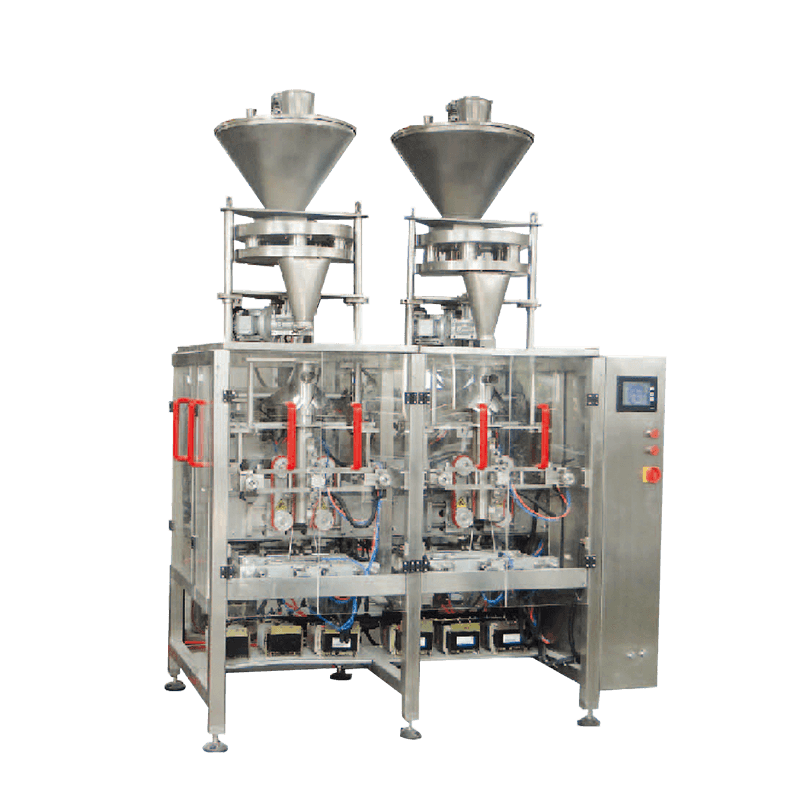
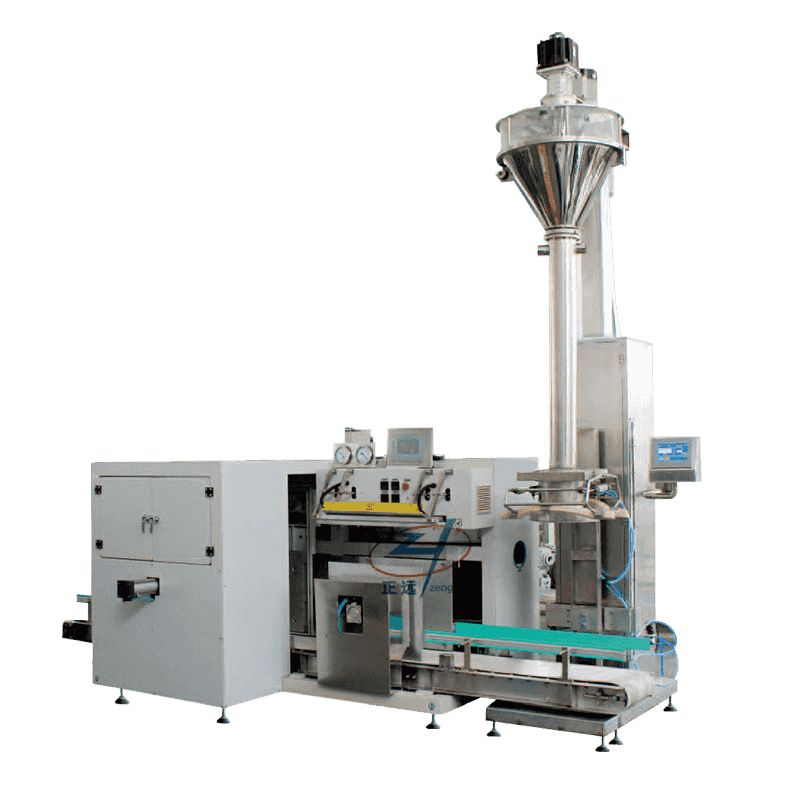
The filling station is the core of the cup quantitative packaging machine — the point where product is dispensed into each cup in a controlled, measured quantity. The filling mechanism used depends entirely on the product characteristics. Volumetric piston fillers are the most common choice for liquid and semi-liquid products: a piston draws a precise volume of product from the supply hopper into a cylinder and then pushes it into the cup. The piston stroke length determines fill volume and is adjustable within the machine's range. Auger fillers are used for powders and fine granules: a rotating screw (auger) within a vertical tube conveys a measured volume of powder downward into the cup, with fill weight controlled by the number of auger rotations. Multihead weighers or belt weighers handle irregular solid products like nuts, fruits, and confectionery where volume measurement is impractical and weight accuracy is required. Electronic load cells connected to the control system continuously monitor fill accuracy and provide real-time feedback for automatic adjustment.
Lidding and Sealing
After filling, cups move to the sealing station. The most common sealing method in cup packaging is heat sealing — a roll of lid film (typically aluminum foil, PET film, or a composite laminate) is drawn over the filled cups and a heated sealing tool presses the film against the cup rim for a defined dwell time and pressure, forming a hermetic seal. The seal must be strong enough to prevent leakage and maintain the modified atmosphere or vacuum inside the cup during storage and distribution, while also being peelable by the consumer without requiring excessive force. Some machines also apply snap-on plastic overcaps in addition to the heat-sealed lid film, providing resealability after the foil seal is peeled. Ultrasonic sealing is an alternative to heat sealing that uses high-frequency vibration to generate localized heat at the seal interface — it offers faster cycle times and better performance on contaminated sealing surfaces.
Coding, Inspection, and Discharge
After sealing, most production lines include inline date coding — printing the best-before date, batch number, and other traceability information onto the lid film using inkjet, thermal transfer, or laser coding systems. Vision inspection cameras may check for correct fill level (through transparent cups), lid seal integrity, and correct code placement before cups are released onto the discharge conveyor. Rejected cups are automatically diverted to a reject lane. Accepted cups proceed to downstream operations such as multi-pack grouping, tray loading, shrink wrapping, or carton packing.
Main Types of Cup Quantitative Packaging Machines
Cup filling and sealing machines are available in several distinct configurations, each suited to different production volumes, product types, and levels of automation. Choosing the right machine type is one of the most consequential decisions in the equipment selection process.
Semi-Automatic Cup Filling and Sealing Machines
Semi-automatic cup packaging machines require manual cup loading and sometimes manual cup removal after sealing, but automate the filling and sealing operations themselves. They are compact, relatively low-cost, and well-suited to small and medium production volumes — typically 500 to 3,000 cups per hour depending on the model and product. Semi-automatic machines are a practical entry point for startups, small food producers, catering operations, and businesses launching new products that need cup packaging capability without the capital investment of a fully automated line. Their simplicity also makes them easier to clean, maintain, and retool for different cup sizes compared to high-speed automatic systems.
Fully Automatic Rotary Cup Filling Machines
Rotary cup filling machines use a circular carousel or turntable that indexes cups through successive filling and sealing stations as it rotates. Multiple filling nozzles act simultaneously on different cups at different positions around the carousel, which dramatically increases throughput compared to linear single-station designs. Rotary machines are the dominant configuration in dairy, dessert, and beverage cup packaging at medium to high production volumes — typically 3,000 to 30,000 cups per hour for multi-lane rotary systems. They are typically more compact than equivalent-capacity linear machines and handle round cups especially well. High-end rotary cup filling machines from manufacturers like Gram Equipment, Hassia, and GEA can integrate cup forming, nitrogen flushing, filling, and sealing in a single compact machine footprint.
Linear Inline Cup Fill-Seal Machines
Linear inline cup packaging machines process cups in rows moving along a straight conveyor path through successive stations: cup loading, filling, lidding, sealing, coding, and discharge. They handle rectangular or square cups particularly well — shapes that do not feed and index as smoothly in rotary systems. Linear machines are highly flexible for different cup sizes and formats, relatively straightforward to clean and sanitize, and can be configured with multiple lanes running in parallel to increase throughput. They are widely used in fresh food, prepared meal, sauce, and condiment packaging. Production speeds range from 1,000 to over 20,000 cups per hour depending on the number of lanes and the cycle rate.
Thermoform Fill-Seal Cup Machines
Thermoform fill-seal machines form the cup from a flat roll of plastic film inline, immediately fill the formed cups, and seal them with a lid film — all in a continuous, integrated process. This eliminates the need to purchase, store, and handle pre-formed cups. The plastic film roll is significantly more compact and economical to store than stacked pre-formed cups, and the inline forming process guarantees a consistent, clean cup that has never been handled before filling. Thermoform fill-seal machines are heavily used in dairy, fresh food, pharmaceutical, and nutraceutical applications where hygiene, product integrity, and packaging material economics are critical. They represent the highest level of integration in cup packaging and typically require the largest capital investment, but deliver the lowest total packaging material cost per unit at high volumes.
Key Specifications to Evaluate When Comparing Cup Packaging Machines
When evaluating cup quantitative filling machines for purchase, the specification sheet alone can be overwhelming. Here are the parameters that matter most for making an informed comparison:
| Specification |
What It Means |
Why It Matters |
| Production Speed (cups/hour) |
Maximum number of filled and sealed cups produced per hour |
Must match or exceed your required output with headroom for growth |
| Fill Volume / Weight Range |
Minimum and maximum fill quantity the machine can accurately dispense |
Must cover all current and planned product portion sizes |
| Fill Accuracy (±%) |
Allowable variation in fill quantity between cups |
Directly affects product cost control and regulatory compliance |
| Cup Size Compatibility |
Range of cup diameters, heights, and shapes the machine accepts |
Determines product range flexibility and changeover requirements |
| Sealing Method |
Heat seal, ultrasonic seal, snap-on lid, or combination |
Affects seal integrity, lid material compatibility, and shelf life |
| Number of Filling Lanes |
How many cups are filled simultaneously per machine cycle |
Key driver of total throughput; more lanes = higher speed |
| Product Contact Materials |
Materials used in filling nozzles, hoppers, and product pathways |
Must be food-grade (316L stainless steel preferred) for food applications |
| CIP / SIP Compatibility |
Whether machine supports clean-in-place / sterilize-in-place cleaning |
Critical for dairy and other perishable food applications |
| Control System |
PLC type, HMI interface, recipe storage capability |
Affects ease of operation, changeover speed, and data logging |
| Changeover Time |
Time required to switch between different cup sizes or products |
Directly impacts production flexibility and OEE (Overall Equipment Effectiveness) |
Filling Technologies Compared: Choosing the Right Mechanism for Your Product
The filling mechanism is the heart of any cup quantitative packaging machine, and the wrong choice for your product type will lead to chronic inaccuracy, product waste, and maintenance headaches. Here is a practical comparison of the main filling technologies used in cup packaging:
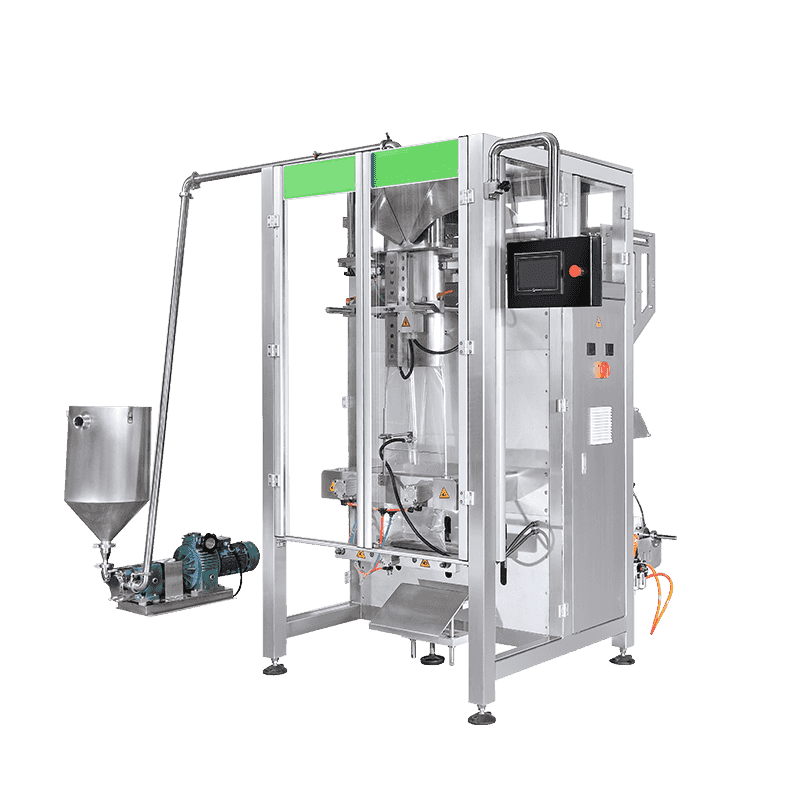
- Piston volumetric filler: Best for liquids, semi-liquids, gels, pastes, and products with particulates up to a certain size. Delivers high volumetric accuracy (typically ±0.5–1%) across a wide viscosity range. Piston diameter and stroke length determine the fill range. Ideal for yogurt, cream, sauce, dressing, and similar products. Requires careful seal maintenance to prevent leakage and product carry-over between cycles.
- Auger screw filler: Best for dry powders and fine granules — coffee, protein powder, spice blends, flour, and similar products. Fill weight is controlled by auger rotation count per cycle. Sensitive to product density variations — if bulk density changes (due to humidity, compaction, or temperature), fill weight accuracy can drift. Requires regular calibration checks and density-compensating controls on high-precision applications.
- Multihead combination weigher: Best for irregular solid products — nuts, dried fruit, confectionery, frozen vegetables, and similar items where volumetric measurement is impractical due to inconsistent product shape and density. Uses multiple weighing buckets that combine in real time to hit a target weight with high accuracy (typically ±0.5–1g). High capital cost but essential for accurate filling of variable-piece-count products.
- Peristaltic pump filler: Best for thin liquids, beverages, and hygiene-sensitive products where minimizing product contact with machine parts is important. The product contacts only the interior of a replaceable silicone or food-grade tube, not the pump mechanism itself. Easy to sanitize and suitable for aseptic applications. Fill accuracy is slightly lower than piston fillers for viscous products.
- Gravity / time-pressure filler: Best for free-flowing liquids of consistent viscosity — water, juice, milk, and similar products. Simple, low-maintenance design that opens a valve for a timed duration to allow a gravity or pressure-driven flow of liquid into each cup. Accuracy depends heavily on consistent product viscosity, temperature, and supply pressure. Not suitable for variable-viscosity or particulate-containing products.
Industries and Applications That Use Cup Quantitative Filling Machines
Cup quantitative packaging machines serve a remarkably diverse range of industries. Understanding how different sectors use these machines can help buyers identify the specific features and standards relevant to their own application:
- Dairy and chilled food: Yogurt, pudding, cream cheese, crème fraîche, fresh cheese portions, butter, and chilled desserts are among the highest-volume cup packaging applications globally. These products require CIP-compatible machines, hygienic design to EHEDG or 3-A standards, and often modified atmosphere or nitrogen flushing for extended shelf life.
- Beverages and liquid food: Single-serve coffee creamers, flavored drink cups, soup portions, and liquid condiments are filled using liquid-capable cup filling machines. Many beverage cup applications require aseptic filling capabilities for ambient-temperature shelf life without preservatives.
- Snack food and confectionery: Portion cups of nuts, seeds, dried fruit, chocolate pieces, and mixed snacks are increasingly popular as on-the-go formats. These applications typically use multihead weigher-based cup filling systems for accurate piece-count or weight control.
- Sauce and condiment production: Single-serve ketchup, mayonnaise, mustard, hot sauce, salad dressing, and jam portions for food service use are filled using piston or auger fillers depending on product viscosity and consistency.
- Pharmaceutical and nutraceutical: Supplement powders, protein blends, and pharmaceutical granules or powders are filled into individual dose cups using high-accuracy auger or volumetric cup fillers with GMP-compliant design, validated cleaning procedures, and full audit trail documentation.
- Cosmetics and personal care: Single-dose face cream, gel, shampoo, and lotion cups for hotel amenities, travel kits, and sample programs are filled using small-format piston fillers with cosmetic-grade product contact materials.
What to Look for When Buying a Cup Quantitative Packaging Machine
Purchasing a cup fill and seal machine is a significant capital investment. Asking the right questions before committing ensures the machine you buy genuinely meets your production needs — not just on day one, but over a 10–15 year service life. Here are the most critical evaluation criteria:
Match Throughput to Your Actual Production Requirements
Always calculate your required throughput based on your realistic daily production targets, operating hours, and planned growth — not just today's volume. A machine running at 90–95% of its rated capacity continuously will have far shorter service intervals and higher maintenance costs than one operating at 70–80% of capacity. Build in a meaningful capacity buffer — typically 25–30% above your peak production requirement — when selecting machine speed. Also confirm whether the quoted production speed is a sustained rate under real production conditions or a theoretical maximum under ideal conditions, which is often significantly higher than what is achievable with the product, cup, and operator factors in your specific environment.
Evaluate Hygiene and Cleanability Design
For food and beverage applications, hygienic machine design is non-negotiable. Evaluate how quickly and completely the machine can be cleaned between production runs. Look for machines with tool-free disassembly of product contact parts for manual cleaning, or full CIP capability for automated cleaning without disassembly. Stainless steel frames with no hollow sections, sloped surfaces that drain rather than pool liquids, accessible weld seams with smooth finishes (Ra ≤ 0.8μm for food contact surfaces), and sealed rather than open cable trays are all markers of genuinely hygienic design. Ask the manufacturer for EHEDG, 3-A, or equivalent hygienic design certification documentation.
Assess Changeover Flexibility and Speed
If your production facility runs multiple cup sizes or product types, changeover time directly affects your production efficiency and machine utilization. Ask for a live demonstration of a complete changeover on the machine you are evaluating — not a salesperson's description of how it should work. Count the number of tools required, the number of parts that need to be changed, and the actual elapsed time. Machines with quick-release tooling, digital recipe storage (one-touch changeover via HMI), and minimal adjustment points dramatically outperform mechanically adjusted machines on changeover efficiency, particularly when multiple format changes per day are required.
Verify Spare Parts Availability and After-Sales Support
A cup packaging machine that stops working because a critical spare part is unavailable or takes six weeks to arrive from overseas is a production crisis. Before purchasing, confirm that the manufacturer holds critical wear parts (filling nozzles, sealing dies, piston seals, auger flights) in a local or regional warehouse with rapid delivery capability. Ask for a recommended spare parts list and pricing. Evaluate the manufacturer's technical support infrastructure — do they offer remote diagnostics, on-site service response within 24–48 hours, and operator training programs? Established manufacturers with a strong regional service network significantly reduce your operational risk compared to purchasing the cheapest available machine from a supplier with no local support presence.
Request a Factory Acceptance Test (FAT) with Your Product
Before accepting delivery of any cup quantitative packaging machine, insist on a Factory Acceptance Test conducted with your actual product in your actual cups at the agreed production speed and fill accuracy specification. The FAT should demonstrate sustained throughput over a meaningful production run (minimum 30–60 minutes), measure actual fill accuracy across a statistically valid sample size, confirm seal integrity through peel force testing, and verify that all safety and hygiene features function as specified. Any deviations from the agreed specification must be resolved before the machine leaves the factory — not after installation at your site, where rectification costs are significantly higher and production disruption is immediate.


 English
 Español
 عربى
عربى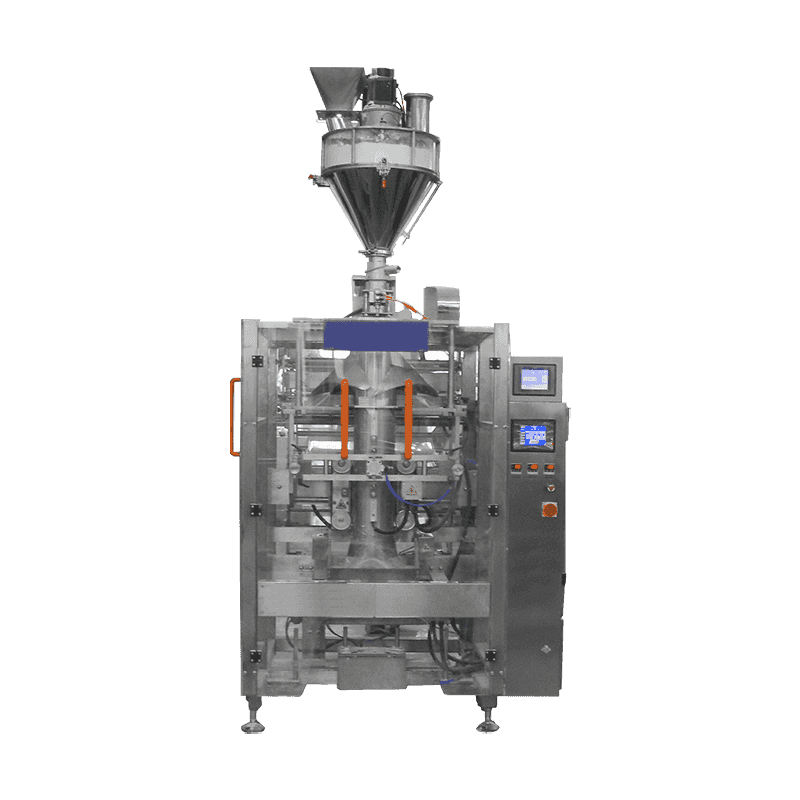


Contact Us