Picture a small food factory where two operators still scoop granules into bags by hand, weigh each bag, and tape it closed. Output depends on their speed, and every batch carries a risk of underfill or spillage. When demand grows, the owner faces a familiar choice: hire more hands or let machines take over.
The short answer is that fully automatic packaging machinery replaces that manual sequence with a coordinated system—metering, bag forming or feeding, filling, sealing, check-weighing, and case handling—operating continuously at a set rate. The practical question is not whether to automate, but which machine configuration fits your product, line speed, and quality requirements.
What Counts as Fully Automatic Packaging Machinery
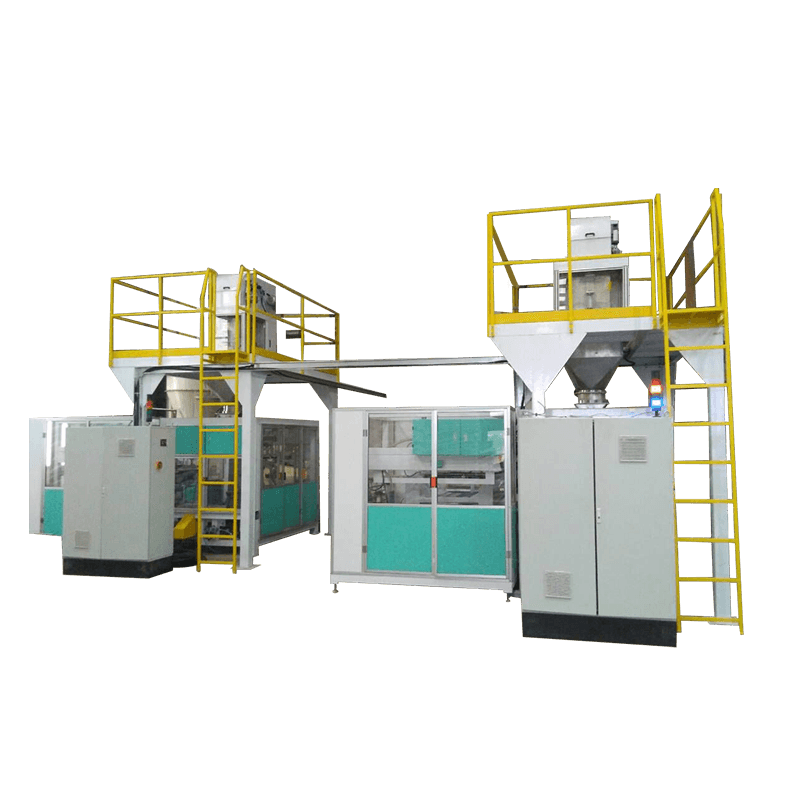
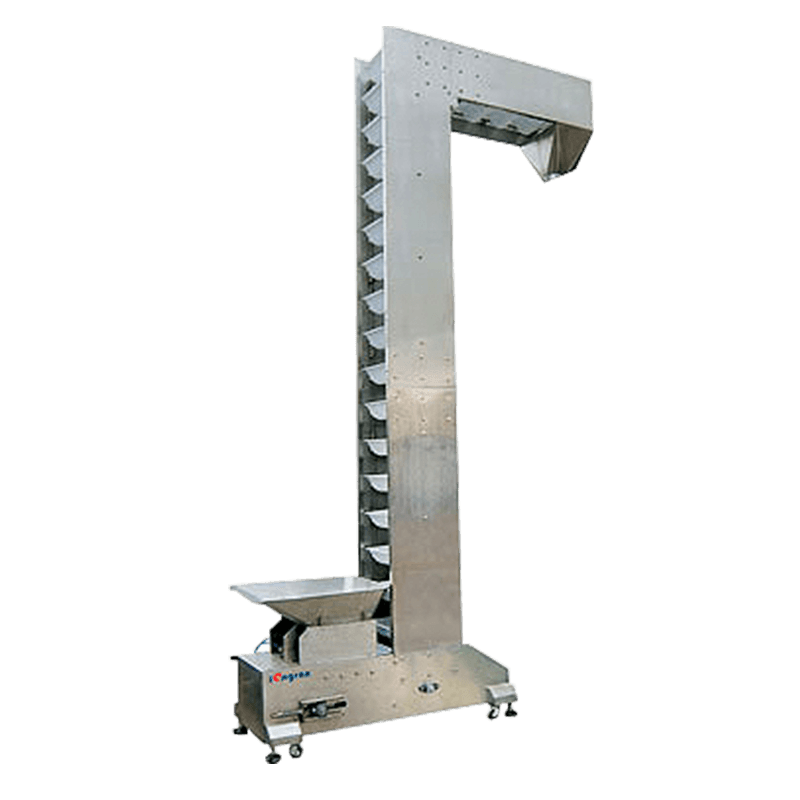
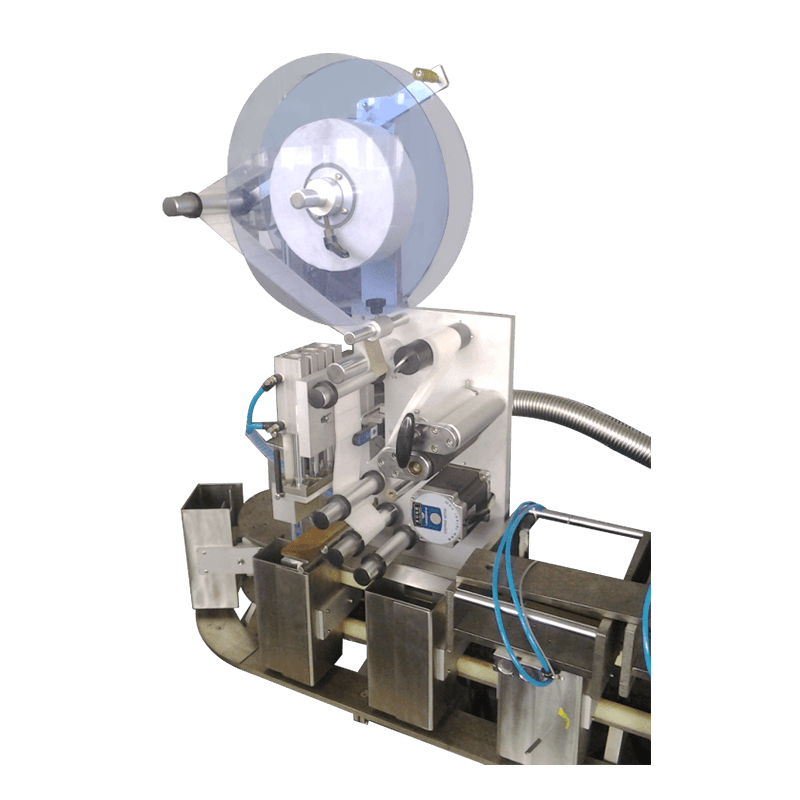
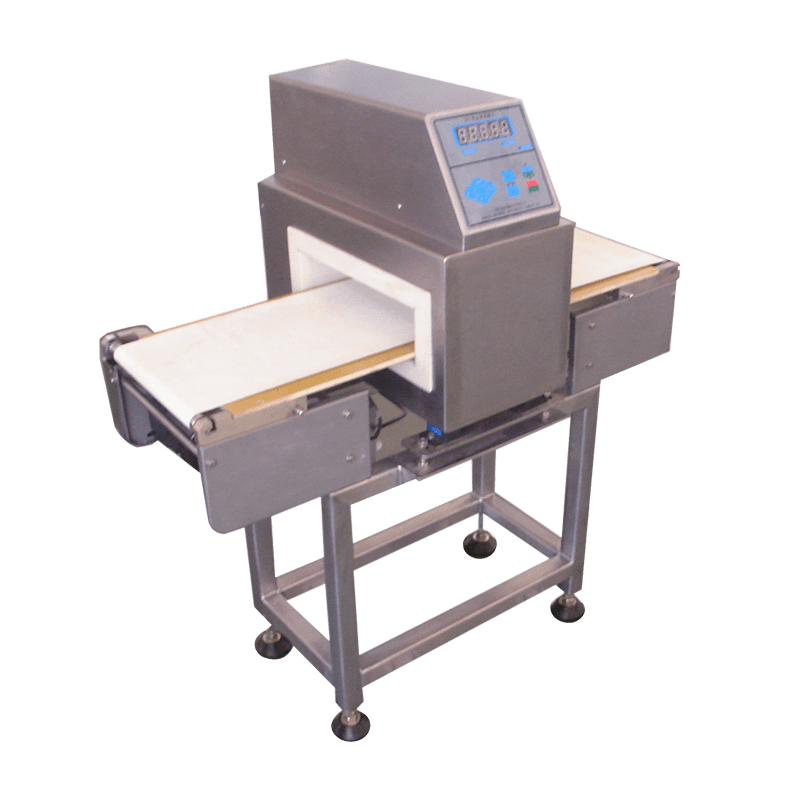
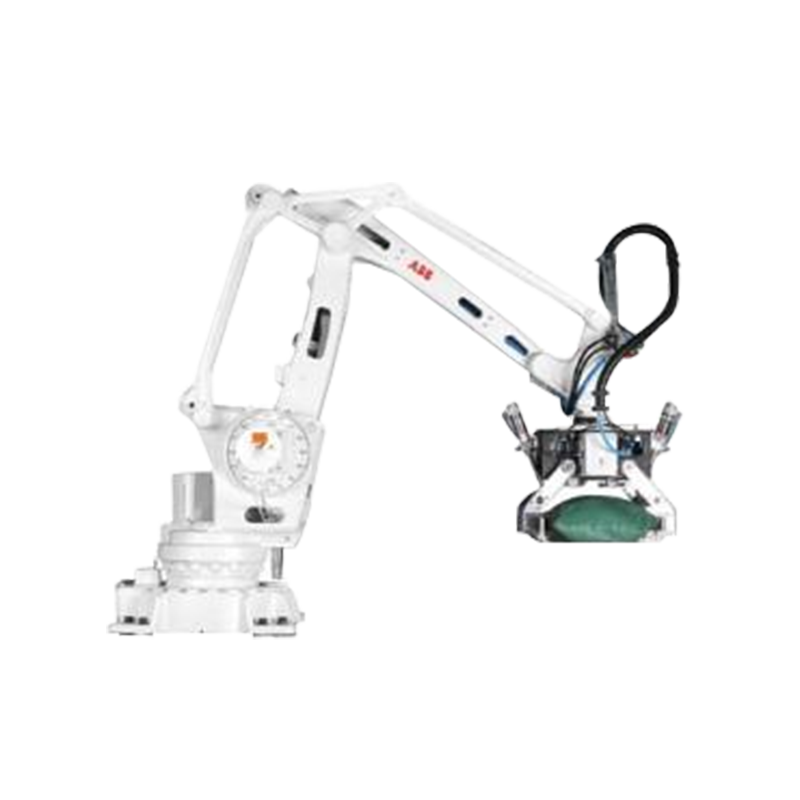
A fully automatic packaging line is not a single box that swallows bulk product and delivers finished cartons. It is a set of synchronized modules, each responsible for one function. Primary packaging machines form or present the package and fill it: vertical form-fill-seal machines for granules, vacuum units for powders, and vertical liquid packers for pouches of sauce or beverage. Secondary equipment then groups, checks, labels, and prepares the packages for shipment; this includes checkweighers, metal detectors, thermal transfer printers, labeling machines, cartoners, and palletizing robots. Conveying equipment, such as bucket elevators, carries material between stages.
This distinction matters on the factory floor. A machine that only fills bags will still create bottlenecks if the upstream feed is uneven or the downstream inspection is manual. Fully automatic, in practice, means that the whole chain from dosing to pallet moves without a person pressing buttons at every step.
What Automatic Lines Deliver in Daily Production
Once a line is set up correctly, the benefits show up in measurable production figures:
- Consistent fill weights: automated dosing systems hold an acceptable tolerance range far better than hand scooping.
- Higher throughput: line speed can run dozens of bags or pouches per minute without fatigue breaks.
- Lower labor cost: one operator can supervise several stations instead of standing at each one.
- Less product waste: sealed, weighed, and inspected pouches reduce rejected batches and rework.
- Traceability: coding and check-weighing create data that can be tied to batch records.
These benefits only materialize when the equipment matches the product's characteristics—grain size, density, powder tendency to bridge, liquid viscosity—and when the upstream and downstream modules are sized to the same target speed.
Matching Machine Type to Product Form
The starting point for selecting fully automatic packaging machinery is the physical form of the product. The same bagging concept must be adapted for free-flowing granules, dusty powders, or liquids.
Table 1. Typical automatic machine families by product form.
| Product form |
Typical machine families |
Main packaging concerns |
| Granules and pellets |
Vertical form-fill-seal machines, cup or weigh fillers, vacuum granule packers |
Weight accuracy, seal integrity, changeover between sizes |
| Powders |
Anti-static dust-removal fillers, valve bag fillers, vacuum powder packers |
Dust control, filling accuracy, cleaning between runs |
| Liquids |
Vertical liquid packaging machines, liquid filling/sealing systems |
Leak-free seals, temperature control, viscosity range |
| Pouches, boxes, bags |
Secondary packaging lines, cartoners, palletizing robots |
Changeover speed, line balance, labeling accuracy |
Granules and Pellets
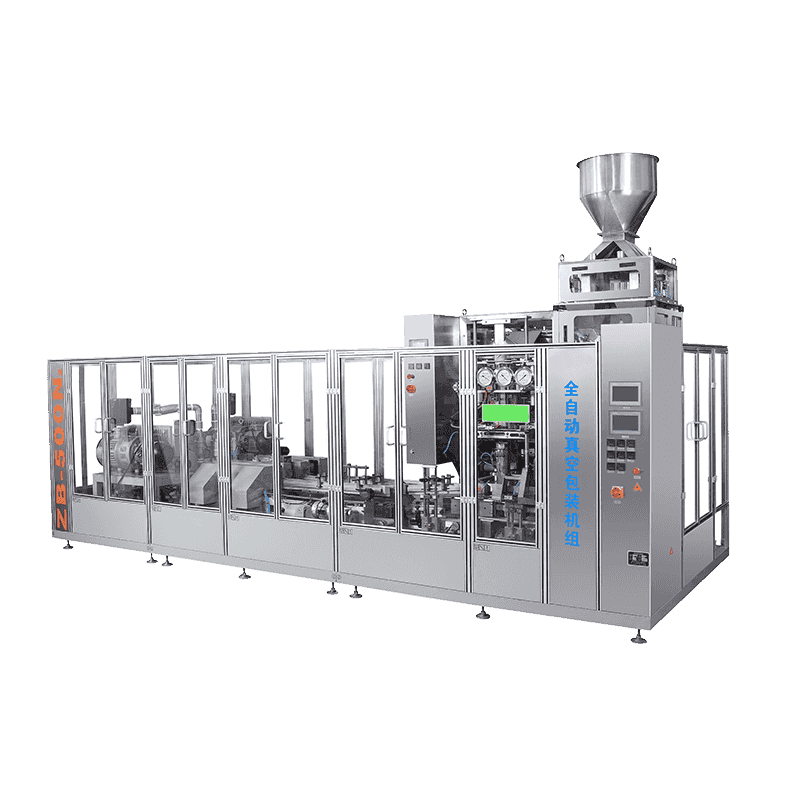
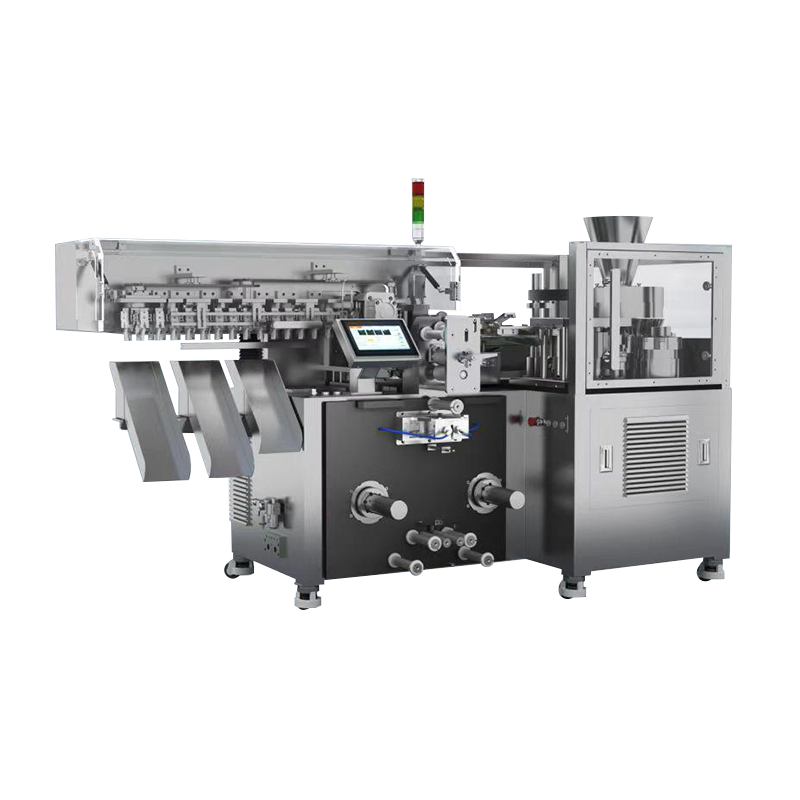
Granular products—seeds, snacks, granules, dry pasta, resins—flow well and are the easiest materials to handle automatically. A vertical form-fill-seal machine can measure by cup or scale, form a pouch from roll stock, fill it, and seal it in one continuous motion. For products that need a longer shelf life, a vacuum granule packing machine removes air before sealing. Speed and accuracy are the main trade-off here: cup dosing is fast and repeatable, while multi-head weighers deliver tighter accuracy for higher-value products.
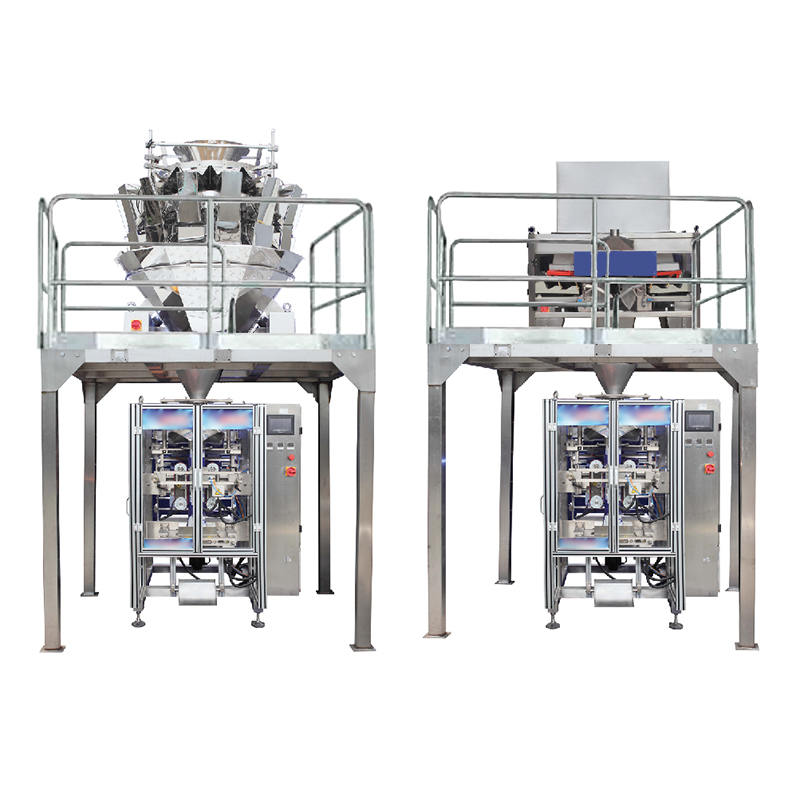 Integrated Automatic Granule Vertical Packaging Machine SeriesThis series combines dosing, bag-forming, filling, and sealing on one frame. It suits mid-size plants upgrading from manual bagging to automatic operation without redesigning the packaging room.View Product →
Modular granule vertical packaging machines such as the MP5000D/5000B/7300/1100 series combine dosing, bag-forming, filling, and sealing stations on one frame. They allow a mid-size plant to move from manual bagging to automatic operation without redesigning the whole packaging room.
Powders
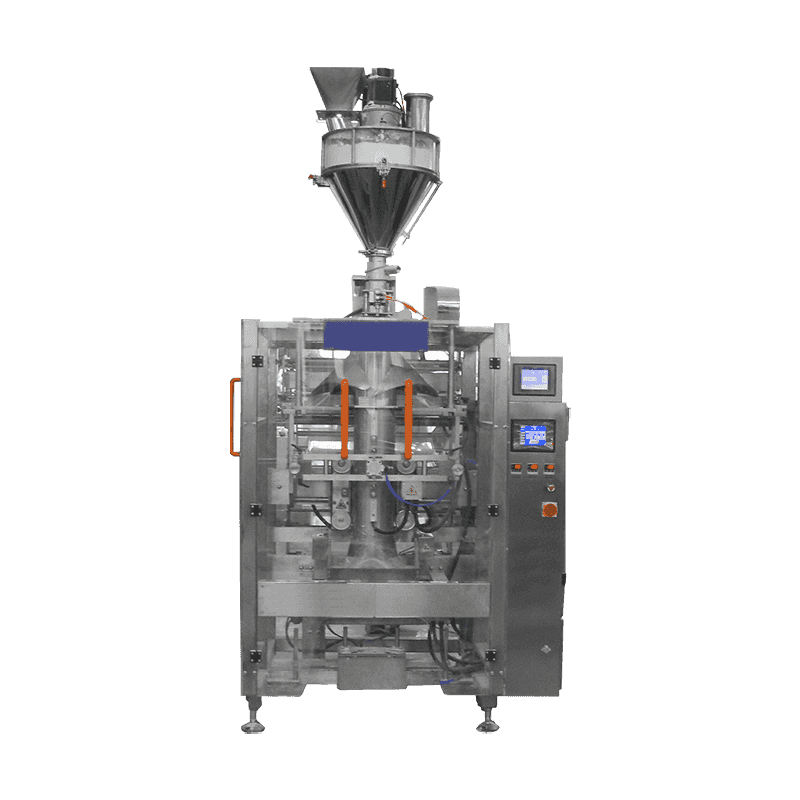
Powders behave differently because air trapped between particles makes them bridge, flush, or dust. Food powders, chemicals, and milk powder need controlled filling speeds and dust extraction at the filling head. Anti-static, dust-removal automatic powder packaging machines are a common choice for food and chemical plants. Vacuum equipment is used where oxygen removal extends shelf life, and automatic valve bag fillers handle open-mouth or valve bags for larger packages.
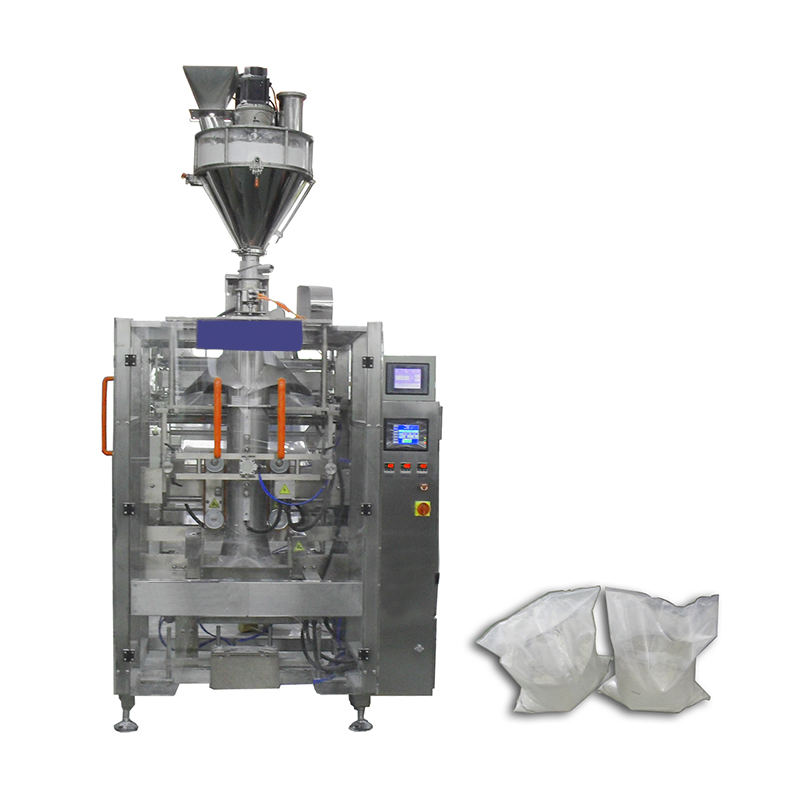 Anti-Static Dust Removal Automatic Powder Packaging MachineCombines bag forming, filling, and sealing with dust extraction to keep the work area cleaner. This reduces housekeeping effort, improves safety, and lowers rejects caused by powder on the seal area.View Product →
An anti-static dust-removal powder packing machine combines bag forming, filling, and sealing with a dust extraction system that keeps the work area cleaner. That design detail matters during a ten-hour shift: less dust in the air means less housekeeping, safer working conditions, and fewer rejects caused by powder on the seal area.
Liquids
Liquid packaging adds the challenge of leak-proof sealing and clean changeover. Automatic vertical liquid packaging machines handle sauces, edible oil, beverages, and liquid concentrates by drawing the product into a dosing pump and sealing a pre-designed pouch. Temperature control is critical because some liquids are filled warm to keep them fluid, while others may foam. These lines are often the simplest to integrate because liquids are easy to transfer by pump.
Finished Bags, Cartons, and Pallets
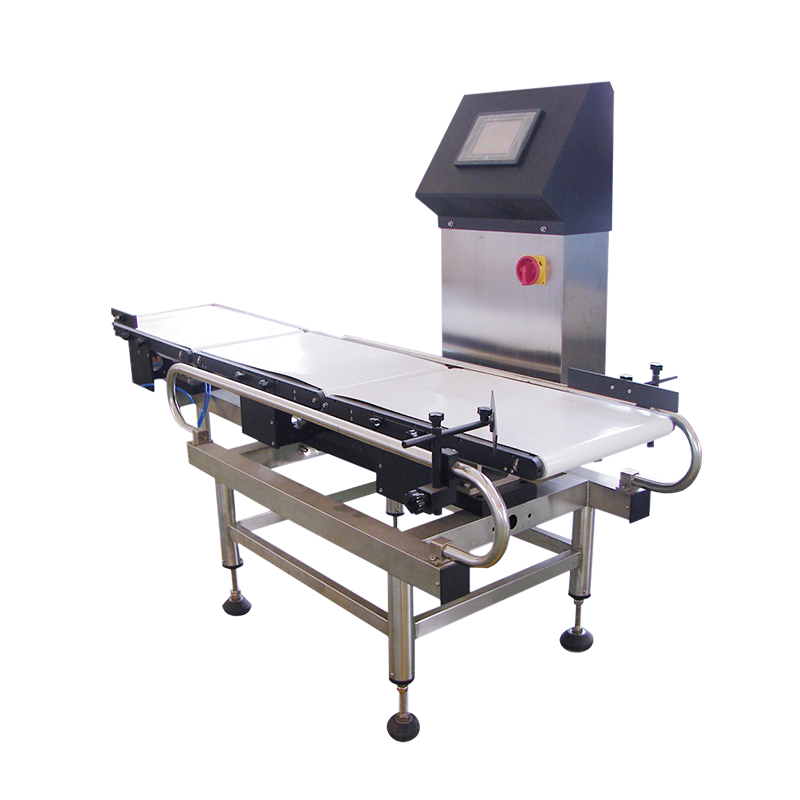
After primary packages are sealed, the line enters inspection and secondary handling. Checkweighers reject under- or overweight pouches; metal detectors identify contamination; thermal transfer printers mark batch numbers and expiry dates; labeling machines apply finished labels; cartoning lines group pouches into boxes; and palletizing robots stack cartons onto pallets. These modules turn a bagging machine into a complete packaging operation.
Selection Criteria That Decide Payback
Comparing quotes for fully automatic packaging machinery is easier when you use the same yardstick. These criteria affect daily uptime and total cost:
- Fill accuracy versus speed: A machine that runs 60 bags per minute but drifts outside tolerance will generate rework. Define the acceptable weight range first, then ask how the dosing system compensates for density changes.
- Bag format and pouch material: Sealing temperature, film thickness, and bag style must match the machine. A vertical packer rated for laminate films may not handle a plain polyethylene roll without adjustments.
- Dust, hygiene, and washdown: Powders and sticky liquids demand easy access to the filling area, dust collection ducts, and materials that survive cleaning chemicals.
- Changeover and cleaning: If the line runs multiple SKUs, measure the time to change film reel, format parts, and dosing settings. Fast changeover directly reduces downtime.
- Controls and data integration: Look for a control system that stores recipe parameters, records production counts, and can connect to a plant network or printer.
- Supplier scope: A supplier that builds both primary and secondary equipment can take responsibility for line balance and compatibility.
Why Integration Matters for a Fully Automatic Line
Buying individual machines is not the same as building a line. A bucket elevator lifts granules into the primary packer; the packed pouches move through a checkweigher and metal detector; a coder prints batch information; a cartoning machine collects pouches into boxes; and a palletizing robot stacks the boxes. If one module delivers at a different rate, the whole line slows down.
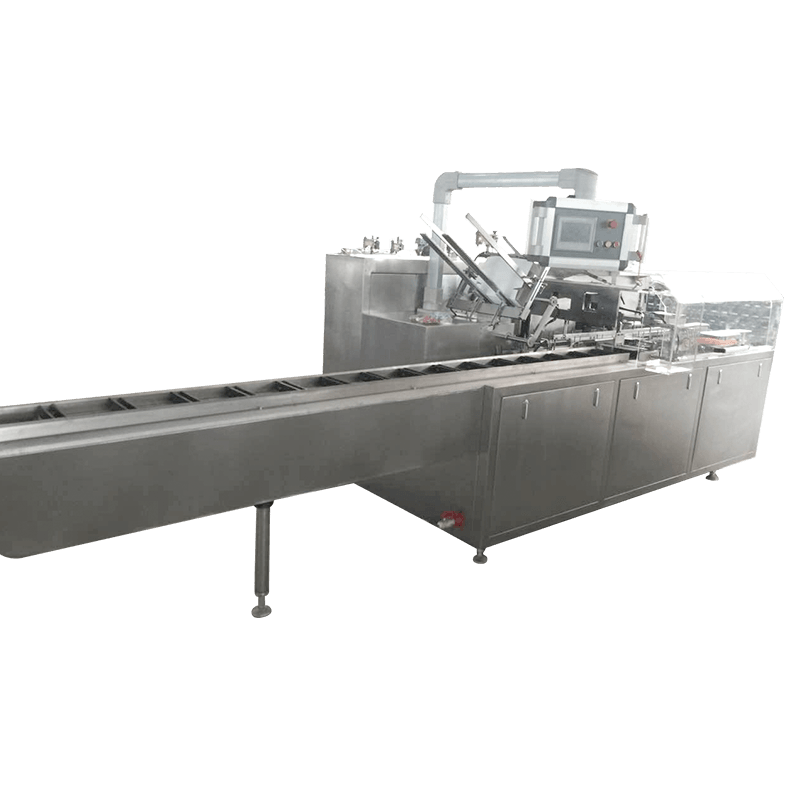
This is why a manufacturer's product range matters. When the same engineering team can supply the primary packer and the downstream handling equipment, they design the transfer points, speeds, and controls as one system. Our overview of the benefits of fully automatic packaging machinery goes into the operating impact in more detail. An interactive small-bag packaging production line, for example, takes pouches from several vertical baggers, groups them, and packs the groups into final bags automatically. It is a practical way to connect primary packaging to secondary handling without adding manual steps.
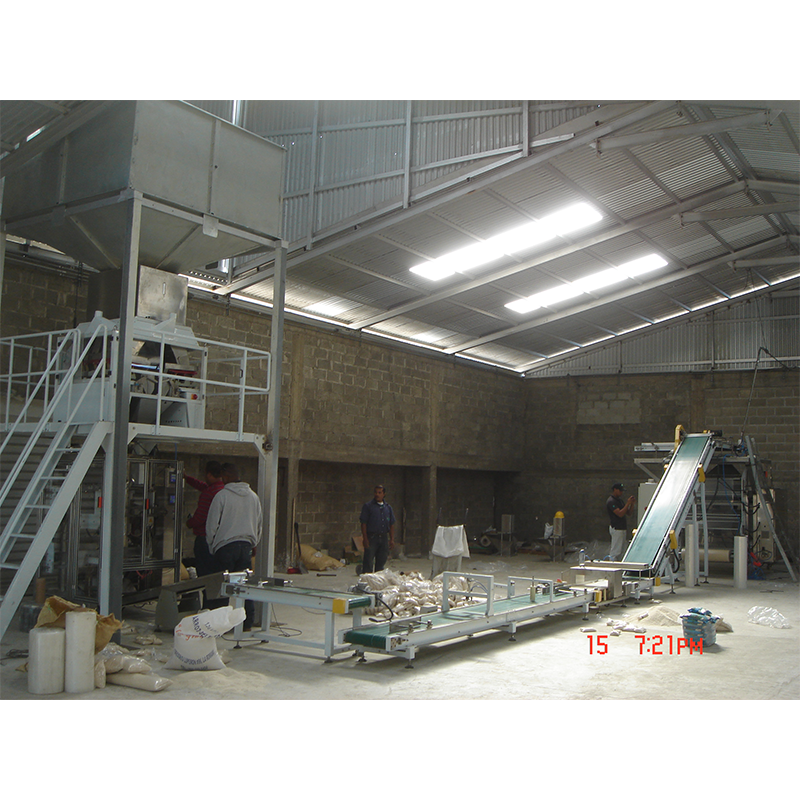 Interactive Automatic Small Bag Packaging Production LineThis line takes pouches from several vertical baggers, groups them, and packs groups into final bags automatically. It links primary and secondary packaging while removing manual steps.View Product →
Choosing fully automatic packaging machinery starts with the product form, the target line speed, and the quality checks that matter for your customers. Once those are clear, compare equipment on dust control, accuracy, cleanability, and the supplier's ability to deliver a complete line. A well-matched automatic line pays for itself through consistent output, lower supervision requirements, and fewer rejected packages. Talk to a packaging machinery manufacturer with integration experience before you commit to a single machine.


 English
 Español
 عربى
عربى


Contact Us