What Is a Granule Packaging Machine?
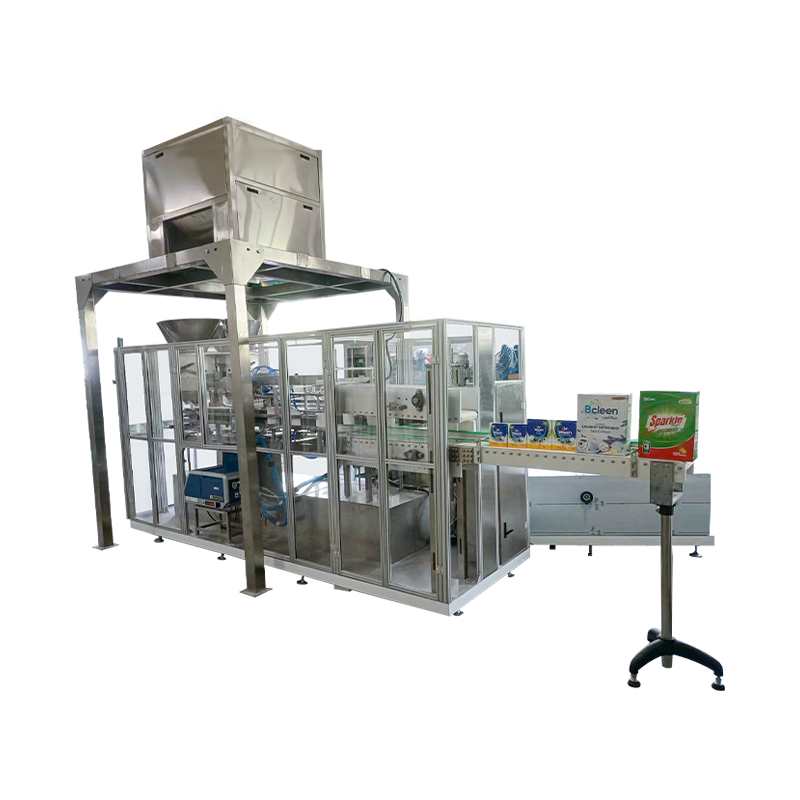
A granule packaging machine is a purpose-built piece of equipment that automatically measures, fills, and seals granular products — materials with a free-flowing, particulate structure — into bags, pouches, sachets, or other packaging formats. Granular products span an enormous range of industries and materials: sugar, salt, coffee, rice, seeds, fertilizer, plastic pellets, animal feed, spices, detergent powder, chemical granules, and pharmaceutical pellets are just a few examples of the products these machines handle every day in production environments around the world.
The defining characteristic of a granule packing machine is its ability to combine accurate weighing or volumetric measurement with high-speed packaging in a single automated process. In manual or semi-manual operations, a worker would scoop and weigh product into a bag, then seal it separately — a slow, labor-intensive process with high variability in fill weight. A granule packaging machine integrates these steps into a continuous, repeatable cycle that can produce hundreds or thousands of packages per hour with fill weight accuracy far beyond what manual operations can achieve.
Understanding the different types of granule packaging machines, the weighing and sealing technologies they use, and what specifications matter most for your specific product and output requirements is essential before making a purchase decision — because the wrong machine configuration can result in poor fill accuracy, product waste, downtime, and a packaging operation that constrains rather than enables production growth.
Main Types of Granule Packaging Machines
Granule packaging machines come in several fundamentally different configurations, each suited to different product types, package formats, production volumes, and budget levels. Choosing the right type is the most important decision in the procurement process.
Vertical Form-Fill-Seal (VFFS) Machines
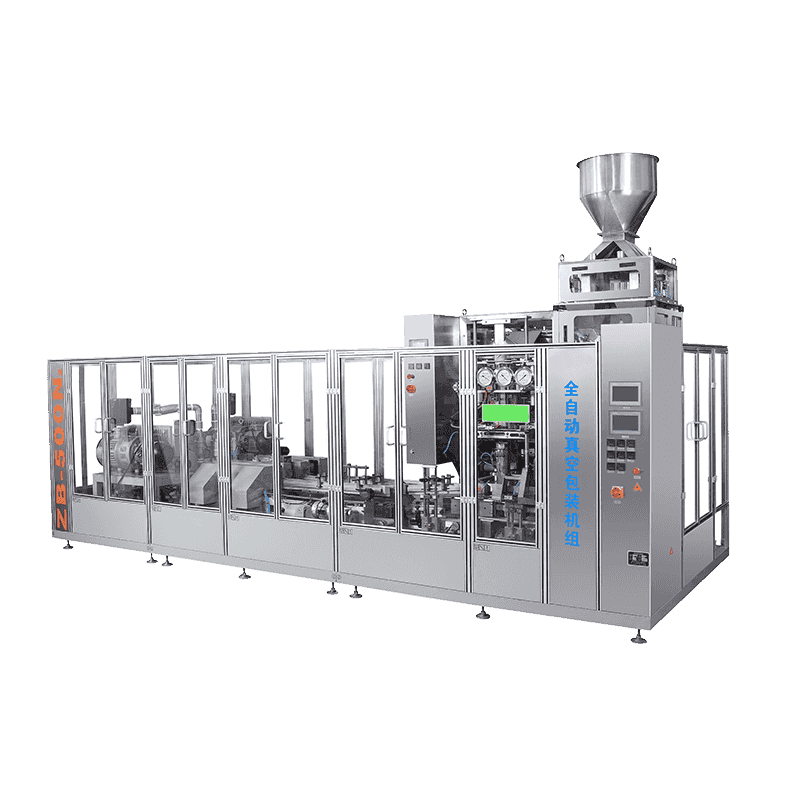
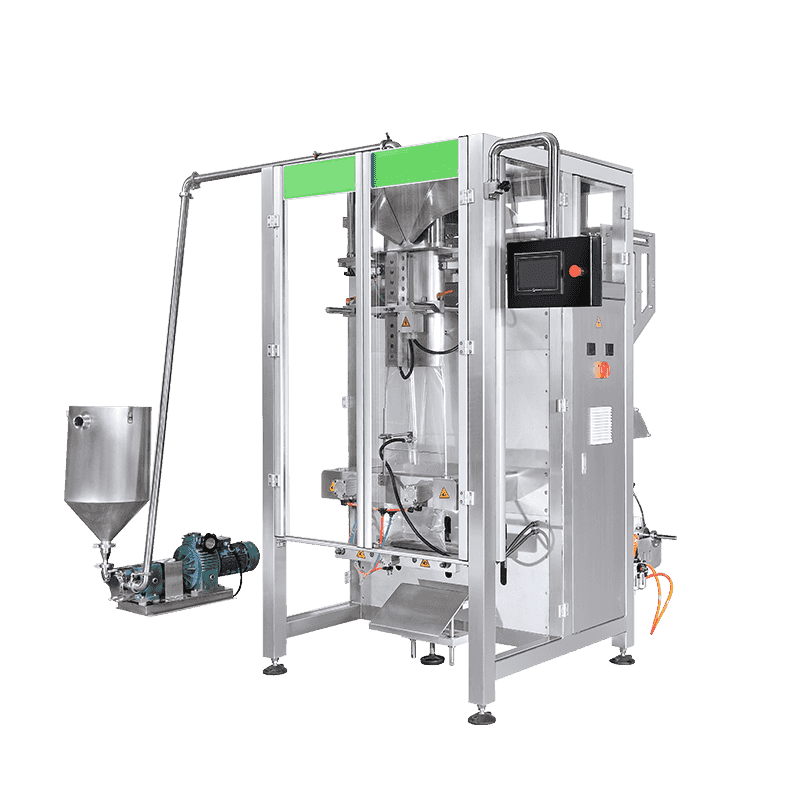
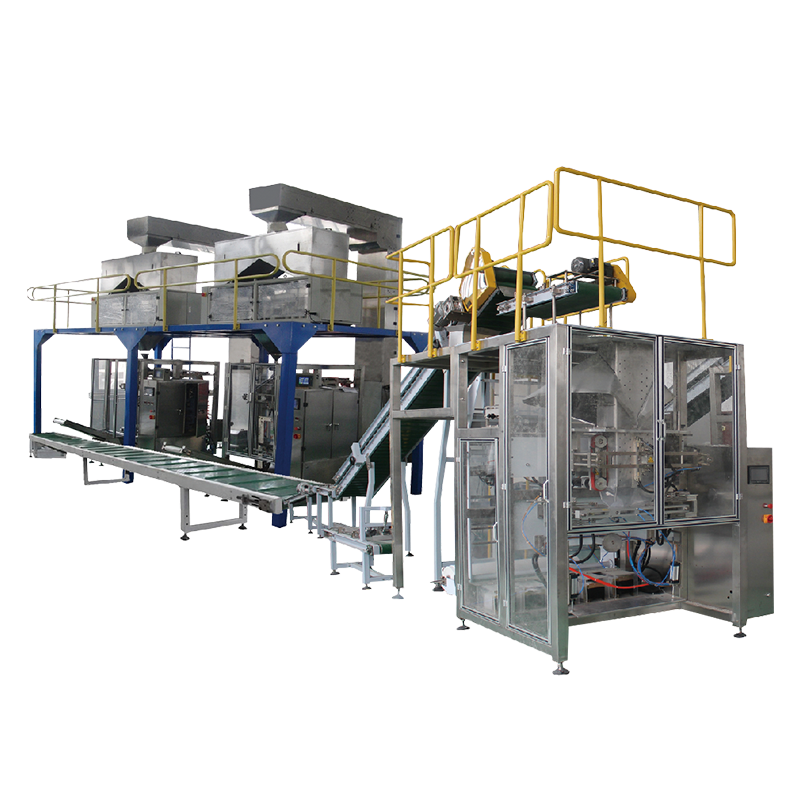
Vertical form-fill-seal machines are the most widely used granule packaging format in food, chemical, and agricultural industries. A VFFS granule machine starts with a roll of flat packaging film, forms it into a tube around a vertical fill tube, fills product into the tube from above, and then seals and cuts individual bags in a continuous downward motion. The entire form-fill-seal process happens in a vertical orientation, which is ideal for free-flowing granules that can be gravity-fed or volumetrically dispensed through the fill tube. VFFS machines can produce pillow bags, gusseted bags, and quad-seal bags depending on the forming and sealing tooling installed. Speeds range from 20 bags per minute for large-format heavy bags to over 200 bags per minute for small sachet formats. VFFS machines are almost always paired with a multi-head combination weigher mounted directly above for gravimetric filling of food granules, or with an auger filler or volumetric cup filler for non-food granules.
Horizontal Form-Fill-Seal (HFFS) Machines
Horizontal form-fill-seal machines form pouches horizontally and fill them from the side or top opening before sealing. HFFS configurations are used for granule products that benefit from stand-up pouch formats (doypack pouches), flat-bottom bags, or three-side-seal sachets that are more easily presented in a horizontal orientation. They are commonly used in the spice, snack, pet food, and pharmaceutical granule sectors where premium pouch aesthetics or specific pouch formats are a marketing requirement. HFFS machines are generally slower than VFFS for simple pillow bag formats but offer much greater flexibility in pouch style and are the standard choice for zipper (resealable) pouch packaging of granule products.
Pre-Made Pouch Filling and Sealing Machines
Pre-made pouch granule packaging machines use pouches that are manufactured separately and supplied in a stack or on a roll of pre-formed bags. The machine picks individual bags from the stack, opens them, fills them with the measured granule product, and then seals the open top. Because the pouch is already formed, the packaging machine does not need forming tooling, and the finished package appearance is determined entirely by the pre-made pouch specification rather than the machine's forming parameters. This makes pre-made pouch machines ideal for premium packaging applications where stand-up pouches, specialty shapes, or high-quality printed film with complex structures are required. The trade-off is higher packaging material cost per unit compared to roll-fed VFFS, since pre-made pouches carry a forming and handling premium from the pouch manufacturer.
Automatic Weighing and Bagging Machines
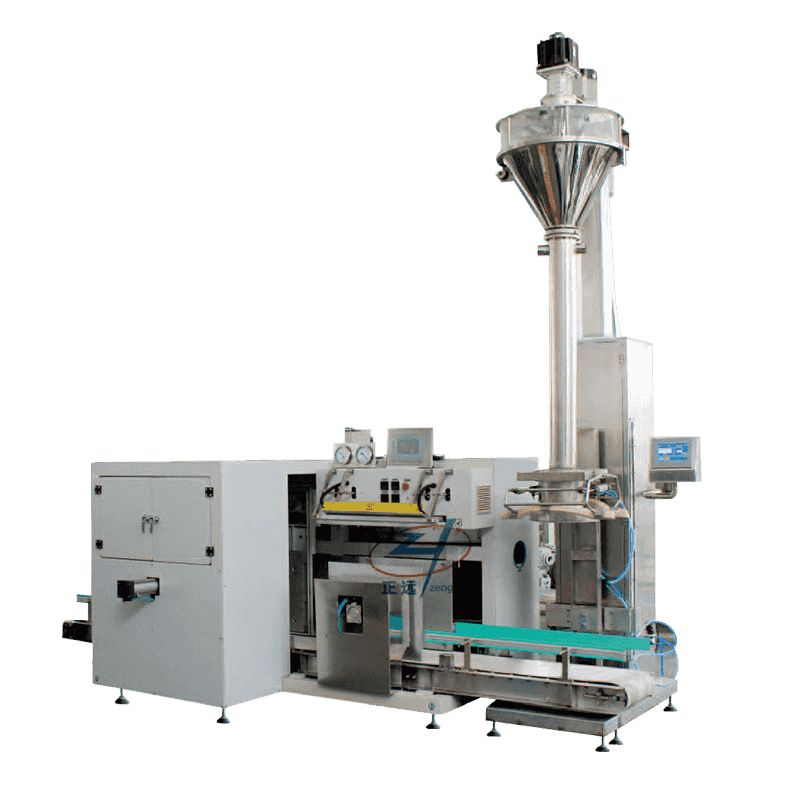
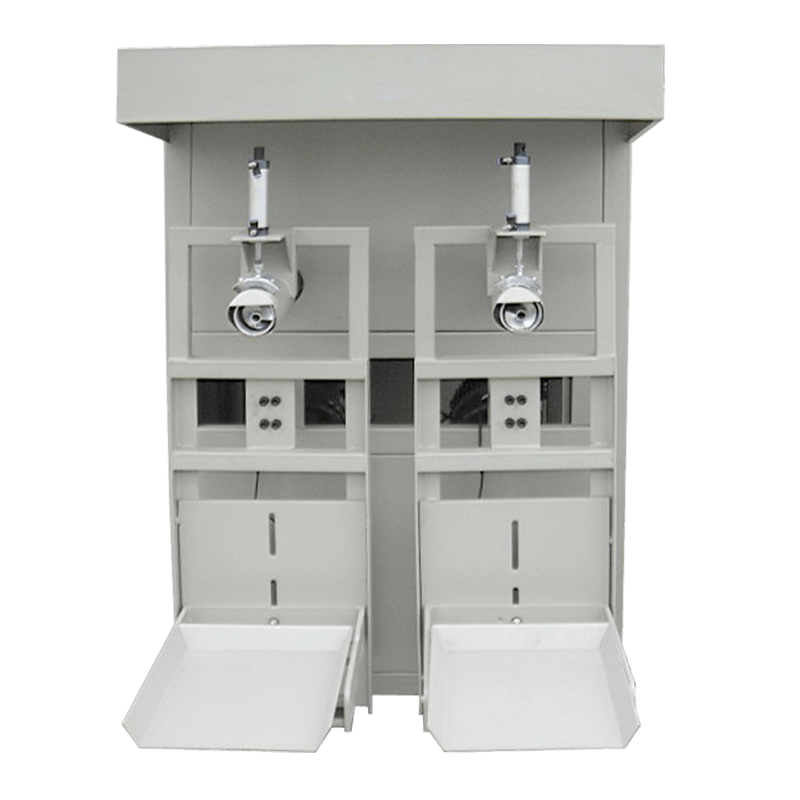
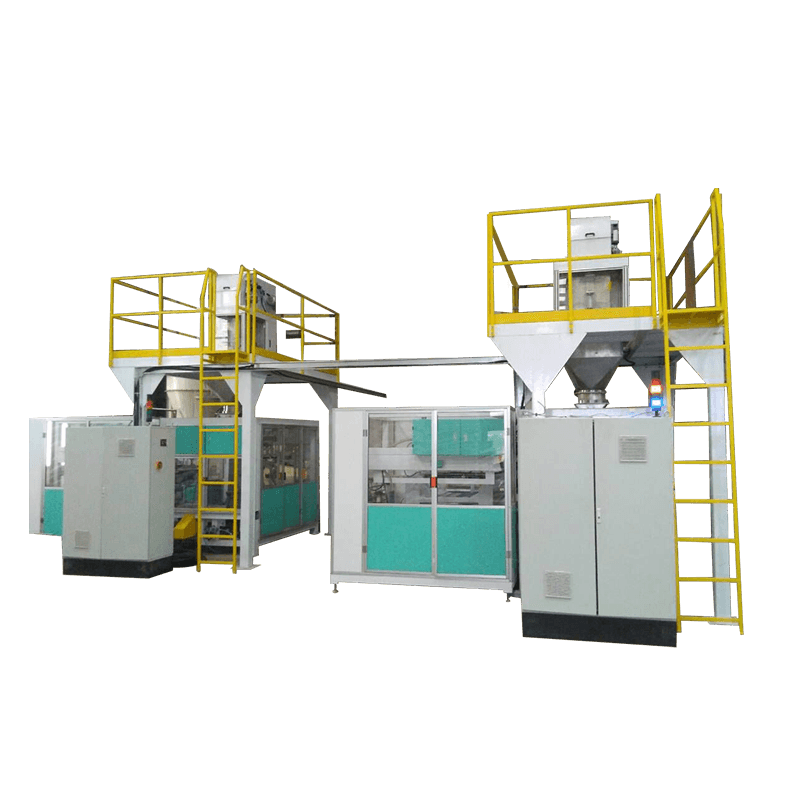
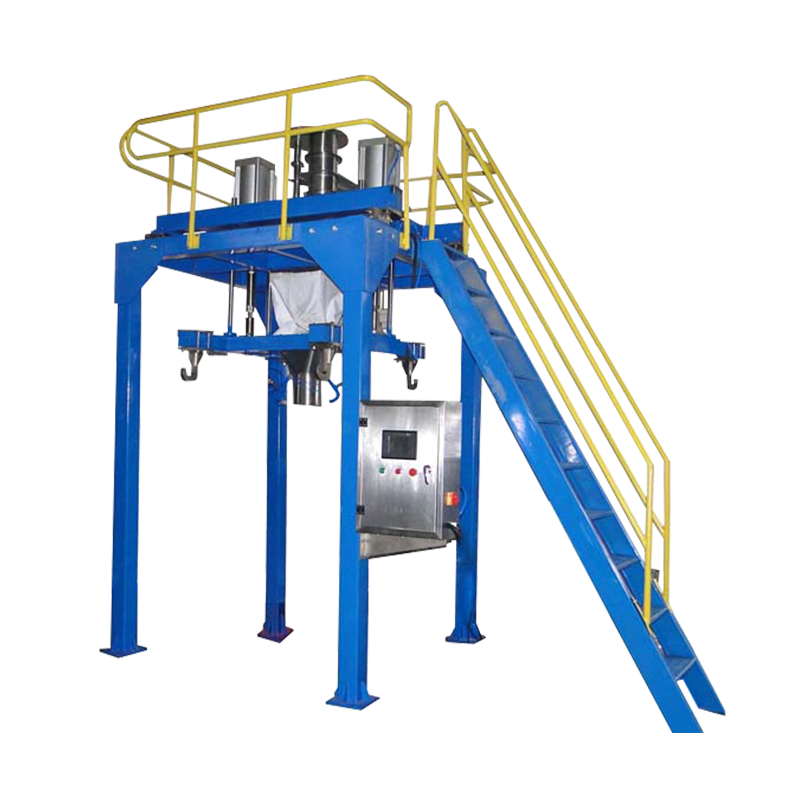
For larger package weights — typically 1kg to 50kg — automatic weighing and bagging machines (also called open-mouth baggers or valve baggers) are used. These machines fill pre-formed open-top bags or valve bags with bulk granule products using a weighing platform that triggers the fill to stop when the target weight is reached, then seals the bag by stitching, heat sealing, or folding and stapling the open top. They are standard equipment in the agricultural seed, fertilizer, animal feed, plastic pellet, and construction material industries. Line speeds are lower than VFFS machines — typically 5 to 30 bags per minute — but the package weights handled are far larger. Fully automatic versions integrate bag presentation, product filling, weight verification, and closure in a single continuous line.
Stick Pack and Sachet Machines
Stick pack machines produce small, narrow, elongated single-serve sachets — the format used for sugar sticks, instant coffee, pharmaceutical powders, and single-serve spice sachets. While technically a variant of VFFS, stick pack machines operate with multiple forming tubes in parallel on a single machine, producing four to twelve sticks simultaneously and achieving very high output rates for small-format products. Sachet machines for granules are used in the pharmaceutical, food service, and condiment sectors for precise single-dose or single-serve portions where fill weight accuracy and hermetic sealing are critical.
Weighing and Filling Systems Used in Granule Packers
The filling and weighing system is the heart of any granule packaging machine — it determines fill weight accuracy, product gentleness, and achievable output speed. The right system depends entirely on the specific granule product's physical characteristics and required fill weight range.
Multi-Head Combination Weighers
Multi-head combination weighers — typically with 10, 14, or 16 weigh heads — are the gold standard for gravimetric filling of food granules in the 50g to 2,000g fill weight range. The weigher distributes product across multiple weigh buckets and then uses a high-speed computer to find the combination of bucket weights that adds up most closely to the target fill weight, discharging that combination of buckets into the packaging machine below. This combinatorial approach achieves fill weight accuracies of ±0.5g or better at speeds of 60 to 200 weighments per minute — performance that no linear weigher or volumetric filler can match. Multi-head weighers are standard in the snack food, nut, dried fruit, pet food, coffee bean, frozen food, and hardware component packaging industries.
Auger Fillers
Auger fillers use a helical screw (auger) rotating inside a tube to deliver a measured volume of product per rotation. They are primarily used for fine powders and small-particle granules — spices, flour, coffee powder, granulated sugar, chemical powder, and pharmaceutical granules — where the particle size is too small for a multi-head weigher to handle reliably. Fill accuracy for a well-set auger filler is typically ±0.5–1.5% of target fill weight. Auger fillers are relatively slow compared to multi-head weighers — typically 20 to 60 fills per minute — but are economical and very widely available. They are the standard filler choice for VFFS machines in the spice, bakery, and fine chemical sectors.
Volumetric Cup Fillers
Volumetric cup fillers use rotating cups of fixed volume to dispense product. They are economical, fast, and simple — but their accuracy is dependent on consistent product bulk density. If the bulk density of the product varies (due to moisture content changes, particle size variation, or settling in the hopper), the fill weight per cup varies proportionally. Volumetric cup fillers are suitable for products with very consistent bulk density and applications where a ±2–5% fill weight tolerance is acceptable. They are used for grains, plastic pellets, seeds, and some chemical granule applications where cost efficiency is prioritized over fill weight precision.
Linear (Single-Head) Weighers
Linear weighers use a single weigh pan or weigh belt that fills to a target weight using a two-speed feed — a fast bulk feed that brings the fill close to target, followed by a slow dribble feed that trickles product in until the exact target is reached. They are slower than multi-head weighers (typically 15–40 weighments per minute) but more accurate than volumetric systems for large or irregular granule products that cannot be handled by multi-head weighers. Linear weighers are used in the seed, specialty food, and industrial granule sectors for fill weights above 500g where multi-head weigher economics don't apply.
Granule Packaging Machine Types at a Glance
The table below summarizes the key characteristics of the main granule packaging machine types to help you narrow down the best fit for your application:
| Machine Type |
Typical Fill Range |
Output Speed |
Package Format |
Best For |
| VFFS + Multi-Head Weigher |
50g – 2kg |
60–200 bags/min |
Pillow, gusseted |
Food granules, snacks, coffee |
| VFFS + Auger Filler |
5g – 1kg |
20–60 bags/min |
Pillow, gusseted, stick |
Spices, fine granules, powder |
| HFFS / Pre-made Pouch |
100g – 5kg |
20–80 pouches/min |
Stand-up, zipper, doypack |
Premium pet food, nuts, seeds |
| Automatic Bagger (large) |
1kg – 50kg |
5–30 bags/min |
Open-mouth, valve bag |
Fertilizer, feed, pellets, grain |
| Stick Pack / Sachet |
1g – 30g |
100–600 sachets/min |
Stick, 3-side seal sachet |
Sugar, instant coffee, pharma |
Industries and Products That Use Granule Packaging Machines
Granule bagging machines are used across a remarkably broad spectrum of industries. Understanding how the equipment is applied in each sector helps clarify the specific requirements — hygiene standards, materials of construction, fill accuracy, and output demands — that differ by application:
- Food and beverage: Sugar, rice, pasta, dried beans, coffee beans, nuts, seeds, breakfast cereals, dried fruit, confectionery, and snack foods are all packaged using granule filling machines. Food-grade machines must comply with food contact material requirements and be constructed with stainless steel contact surfaces, hygienic seals, and CIP (clean-in-place) or tool-free disassembly for sanitation.
- Agricultural: Seed, fertilizer, animal feed pellets, and soil amendment granules are packed in high-volume bag formats (5kg to 50kg) using automatic weighing and open-mouth bagging systems. Dust-handling capability, abrasion-resistant contact surfaces, and robust construction for heavy-duty continuous operation are key requirements.
- Chemical and industrial: Plastic resin pellets, detergent granules, water treatment granules, and industrial salt are packaged using granule packing machines in formats from small retail sachets to bulk 25kg bags. Corrosion-resistant materials and sealed electrical systems are important where hygroscopic or corrosive granules are handled.
- Pharmaceutical: Granule-form medications, effervescent granules, and pelletized oral dosage forms are packaged in sachets or stick packs with extremely tight fill weight tolerances and GMP-compliant machine construction. Pharmaceutical granule packaging machines must meet 21 CFR Part 11 data recording requirements and be validated to GMP standards.
- Pet food: Dry kibble, semi-moist pet food, and treat granules are packaged in pillow bags, stand-up pouches, and large valve bags. Multi-head weighers handle the varied particle sizes of kibble and treats effectively, and the packaging lines often integrate nitrogen flushing to extend shelf life.
- Hardware and fasteners: Screws, bolts, nuts, and small hardware components — which behave like granular products in a packaging context — are counted and packed using combination weighers or counting machines integrated with VFFS or pre-made pouch machines. Count accuracy is critical in this sector, and vibration-based counting systems are often used alongside weight-based systems.
Key Features to Look for in a Granule Packaging Machine
Whether you are purchasing your first granule filling and packing machine or upgrading an existing line, these are the specifications and features that have the most direct impact on operational performance, product quality, and total cost of ownership:
- Fill weight accuracy and certification: Verify the machine's stated fill weight accuracy specification and ask for independent test data — not just manufacturer claims. For retail food products sold by stated net weight, fill accuracy must comply with relevant weights and measures legislation (EU Directive 76/211/EEC, NIST Handbook 133 in the US). Request test reports showing fill weight distribution across 100+ consecutive fills at your target weight.
- Film compatibility and seal quality: The machine must be compatible with your intended packaging film — thickness, structure (mono vs. laminate), and material type (PE, PP, PET/PE, foil laminates). Poor heat sealing causes leaking packages and product waste. Request seal strength test data (peel force, burst pressure) for the film types you intend to use.
- Product contact materials: All surfaces that contact the granule product should be specified — food-grade 304 or 316L stainless steel for food applications, with surface finishes smooth enough to prevent product buildup and facilitate cleaning. Non-food applications may permit other materials, but corrosion resistance and ease of cleaning remain important.
- Changeover time and flexibility: In production environments where multiple SKUs (product types, fill weights, or package sizes) are run on the same machine, changeover time between formats directly affects production efficiency. Machines with tool-free changeover, saved recipe programs on the HMI, and quick-release forming collars reduce changeover from hours to minutes. Ask specifically how long a complete changeover to a different fill weight and bag size takes on the machine being evaluated.
- Dust and product containment: Fine or dusty granule products create contamination and safety issues if not properly contained. Look for machines with enclosed product hoppers and chutes, integrated dust extraction ports, and sealed electrical enclosures rated to the appropriate IP class (IP54 minimum for dusty environments; IP65 or higher for washdown environments).
- Gas flushing capability: For food granules susceptible to oxidation or requiring extended shelf life — coffee, nuts, snacks, dried fruits — modified atmosphere packaging (MAP) using nitrogen or CO₂ flushing is essential. Confirm whether the machine has integrated gas flushing capability and can achieve the residual oxygen levels required for your product's shelf life specification.
- Control system and data connectivity: Modern granule packaging machines use PLC-based control systems with touchscreen HMIs that store multiple product recipes, log production data, and provide fault diagnostics. For production environments implementing Industry 4.0 or OEE (Overall Equipment Effectiveness) monitoring, check whether the machine supports OPC-UA, MQTT, or other industrial data communication protocols for integration with factory management systems.
Common Problems and How to Avoid Them
Even well-specified granule packaging machines can underperform if certain operational and setup factors are not managed correctly. Here are the most common problems encountered in granule packing operations and how to prevent them:
- Inconsistent fill weights: Most commonly caused by inconsistent product bulk density (often due to humidity or temperature variation in the product), bridging or arching in the product hopper, or vibration settings on multi-head weighers not optimized for the specific product. Ensure the product is conditioned to consistent moisture content before running, and that hopper agitators or vibrators are correctly set to maintain consistent flow.
- Poor heat seals or seal leakage: Seal jaws that are too hot, too cold, or misaligned cause weak or contaminated seals. Product dust or granules caught in the seal zone is the most common cause of seal failure in granule packaging — ensure the fill rate and fall path are set so product does not contact the seal zone during the sealing cycle. Regular cleaning of seal jaws and checking jaw temperature calibration prevents most seal quality issues.
- Film tracking and registration errors: Film that wanders off-center on the forming collar causes misaligned seals and poorly formed bags. This is usually caused by incorrect film tension, a worn or damaged film drive roller, or film that is wound off-center on the supply roll. Check film roll quality from suppliers and maintain drive rollers on schedule.
- Product buildup and contamination: Sticky or hygroscopic granules (some sugar types, certain chemical granules) tend to build up on chutes, fill tubes, and weigh buckets over time. Implement a cleaning schedule appropriate to the product — some products require cleaning every few hours, others only between shifts. Use machine designs with polished stainless contact surfaces and avoid sharp corners where product can accumulate.
- Downtime from spare parts unavailability: Seal jaws, forming collars, drive belts, and film tension rollers are wear parts that need planned replacement. Before purchasing any granule packaging machine, confirm that spare parts are stocked locally or can be delivered within an acceptable lead time. Machines from suppliers with no local service presence can be extremely costly to maintain when critical wear parts must be imported with long lead times.
What to Check When Buying a Granule Packaging Machine
Purchasing a granule filling machine — whether new or refurbished — is a significant capital investment. These are the checkpoints that protect you from costly mismatches between machine capability and production requirements:
- Factory acceptance test (FAT) with your actual product: Insist on a factory acceptance test run using your actual product and target packaging film before delivery. A machine that runs perfectly with dry rice during the supplier's internal testing may perform very differently with your sticky, dusty, or irregularly shaped granule product. FAT with real product is non-negotiable for high-value installations.
- OEE and demonstrated throughput: Ask the supplier to demonstrate the machine running at its rated speed for a sustained period (30–60 minutes minimum) during the FAT. Calculate the actual OEE (accounting for downtime, speed losses, and quality rejects) rather than accepting the theoretical maximum speed as the performance benchmark.
- Warranty terms and after-sales service: Confirm the warranty period (typically 12 months), what is covered, and what the supplier's response time commitment is for breakdowns. For production-critical equipment, an on-site service response time of 24–48 hours is the minimum acceptable. Evaluate the supplier's local technical team depth and spare parts inventory before signing a purchase agreement.
- Compliance and certifications: Confirm that the machine carries the relevant certifications for your market and application — CE marking for EU, UL/CSA for North America, and specific food machinery standards (EC 1935/2004 for food contact in the EU, 3-A sanitary standards for dairy applications). For pharmaceutical applications, confirm GMP design compliance and the supplier's capability to support IQ/OQ/PQ validation documentation.
- Operator training and documentation: A well-documented machine with comprehensive operator manuals, maintenance schedules, and parts lists is worth significantly more in production than a technically superior machine with poor documentation. Confirm that training for your operators and maintenance technicians is included in the purchase price and scheduled for delivery alongside the machine.


 English
 Español
 عربى
عربى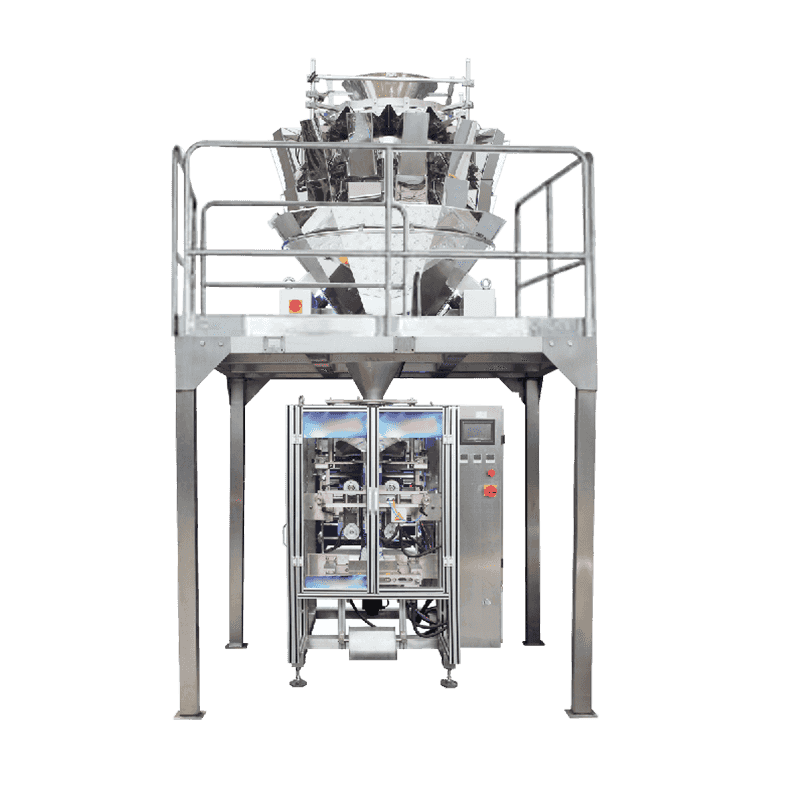



Contact Us