A granule packaging machine is the equipment that turns free-flowing bulk material such as salt, sugar, rice, seeds, coffee beans, detergent, plastic pellets, or pharmaceutical granules into sealed, weighed, market-ready packs at a repeatable speed. On most production floors it sits between the material handling system and the checkweigher, and it usually sets the pace for everything downstream of it.
At Anhui Mach Packing Machinery Co., Ltd., we have been building granule packaging machines for food, pharmaceutical, and chemical producers for many years. The questions our engineers hear most often are always the same: which machine type fits my product, how fast can it really run, and how do I keep it accurate shift after shift? This guide answers those questions in plain terms, based on what we see on real production lines.
What a Granule Packaging Machine Actually Does
A vertical form-fill-seal granule packaging machine performs four jobs in one continuous cycle. It pulls film from a roll and forms it into a tube, seals the bottom of the bag, doses a measured quantity of granules into the formed bag, then seals the top and cuts the pack free. Pouch-fed and premade-bag versions skip the forming step but follow exactly the same logic: dose, fill, seal, discharge.
That cycle repeats dozens of times per minute, so the real engineering is not in the individual steps. It is in keeping all four synchronised while holding weight or volume inside tolerance. A typical automatic granule packing machine cycle looks like this:
- Film is drawn down, and the vertical and bottom seals are formed.
- The dosing device, whether a measuring cup, an auger screw, or a weighing hopper, releases the preset quantity.
- The filled bag is top-sealed, cooled, and cut from the film tube.
- The finished pack drops onto the takeaway conveyor and moves toward checkweighing, labeling, or cartoning.
The dosing step is where accuracy is won or lost, and it is also the step that changes most between machine types.
The Main Types of Granule Packaging Machines
Granule packaging machines are usually classified by how they measure the product. The table below compares the five configurations we build and specify most often for our customers.
Table 1: Common granule packaging machine types compared by dosing principle, typical output, and best-fit products. Speeds are indicative and depend on pack size, film structure, and product flowability.
| Machine type |
Dosing principle |
Typical output |
Best-fit products |
| Cup or volumetric machine |
Fixed-volume measuring cup |
Up to 80 bags per minute on small packs |
Uniform, free-flowing granules such as salt and sugar |
| Net-weight machine |
Load cell with coarse and fine feed |
20 to 60 bags per minute |
Granules sold by declared weight, including variable-density products |
| Vacuum granule machine |
Volumetric or weight dosing plus a vacuum chamber |
10 to 40 bags per minute |
Coffee, nuts, dried fruit, rice and other oxygen-sensitive granules |
| Integrated vertical form-fill-seal machine |
Combined dosing and bag forming on one frame |
30 to 70 bags per minute |
Producers who need one compact machine for several pack sizes |
| Heavy-bag and valve-bag machine |
Weight dosing with large flow gates |
5 to 20 bags per minute |
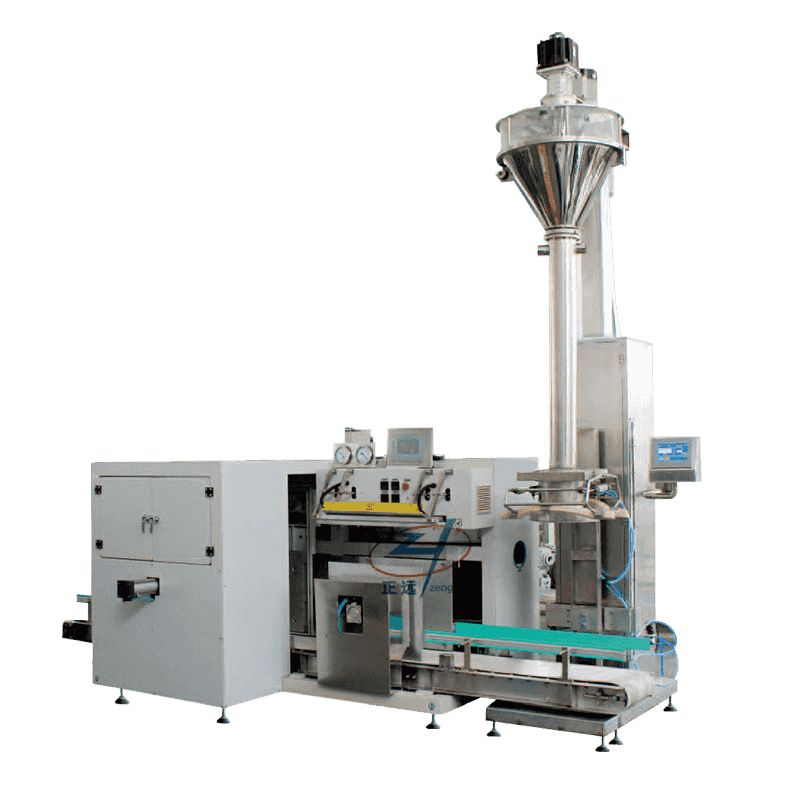
10 to 50 kg industrial packs of pellets, fertilizer, and resin |
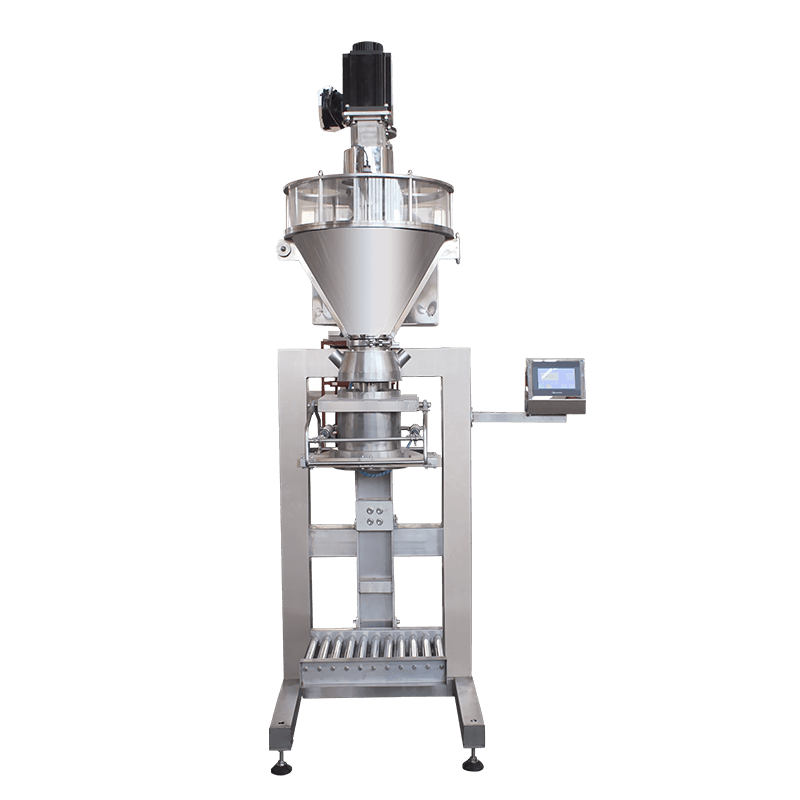
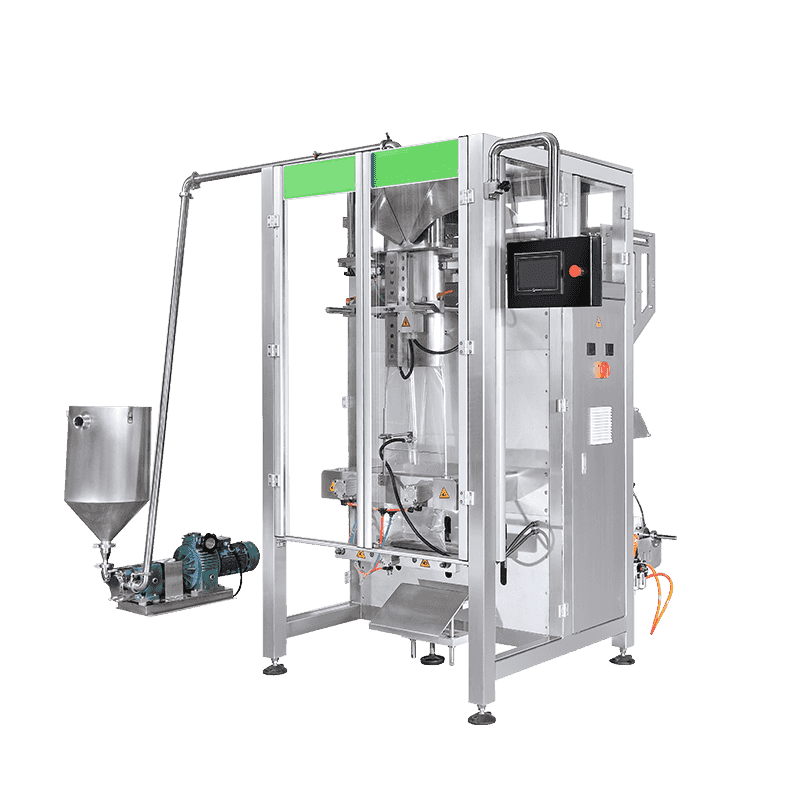
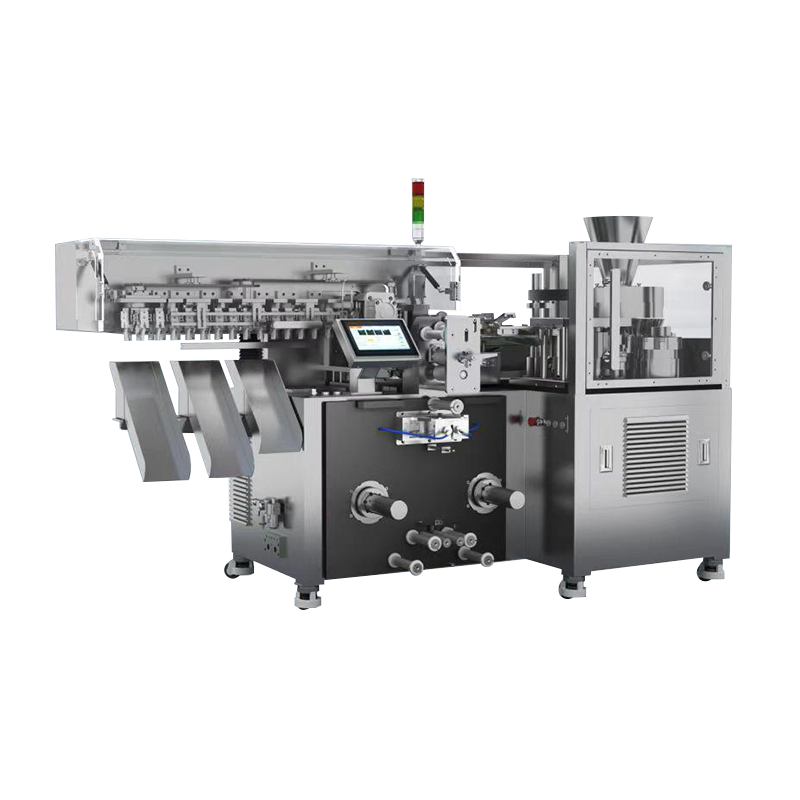
Cup dosing is the fastest and simplest option for uniform, free-flowing granules, and it is the configuration behind many of the world's salt and sugar lines. Our MP5000DS high speed cup quantitative packaging machine reaches high output on small sachets and pouches while keeping the measuring cup matched to the product's bulk density, which is exactly what keeps a volumetric line stable over a long shift.
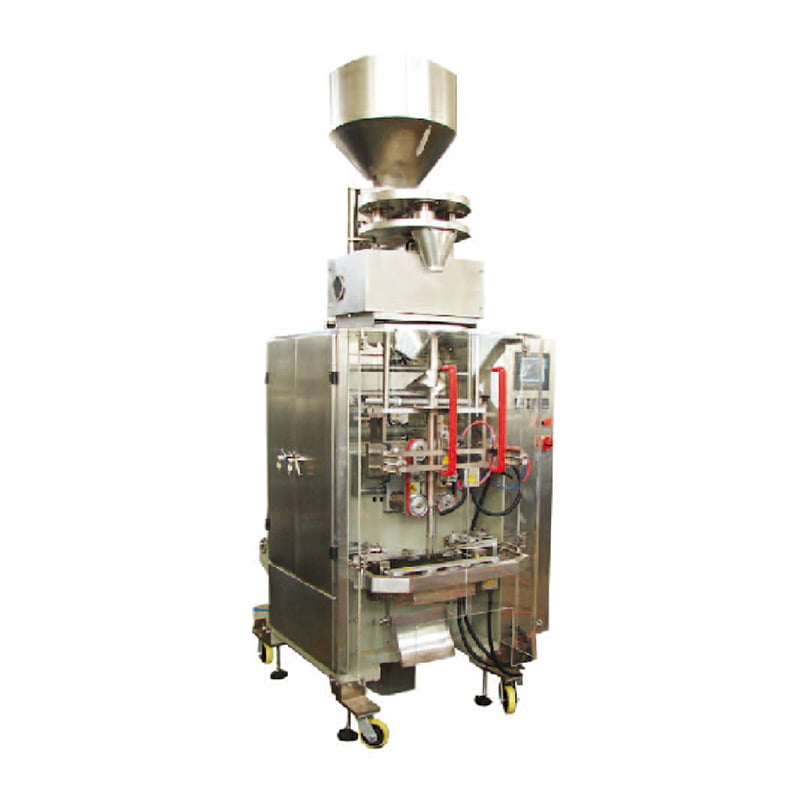 MP-5000DS High Speed Cup Quantitative Packaging Machine(Other weight is customizable)View Product →
How Dosing Accuracy Is Controlled
Volumetric dosing
A measuring cup, telescopic cup, or auger screw releases a fixed volume on every cycle. The volume stays constant, but the weight of that volume drifts when bulk density changes, for example when a new batch of material arrives with a different moisture content. Volumetric machines are fast, mechanically simple, and easy to maintain, which makes them a favourite for commodities where a small weight variation is acceptable.
Net-weight dosing
Load cells weigh each dose individually, and the control system adjusts the feed gates automatically. A coarse feed fills most of the target weight quickly, then a fine feed tops it up to the set point. Accuracy of roughly half a percent to one percent of the target weight is realistic on a well-tuned machine. Net-weight dosing is slower per cycle than cup dosing, but it compensates for product variation instead of ignoring it, which matters greatly for premium goods and regulated markets.
If you would like to go deeper into the mechanics, our engineering team has published a detailed breakdown of how a granule packaging machine controls the weight or volume in each package, including the role of feedback and rejection logic.
Choosing the Right Machine for Your Product
Machine selection should start with the product, not with the price list. Four groups of questions decide almost everything.
Product characteristics
- Bulk density and batch-to-batch consistency, which determine whether volumetric dosing is realistic.
- Flowability and angle of repose, because sticky or irregular granules bridge in hoppers and starve the dosing unit.
- Dust generation and static build-up, which affect sealing quality and call for antistatic or dust removal features.
- Hygroscopicity and fragility, since some granules absorb moisture quickly or break apart during feeding.
Pack format, film, and speed
Pillow bags, gusseted bags, stand-up pouches, and premade bags all require different forming sets. Film structure, thickness, and sealing temperature window must be confirmed before a machine is ordered, because a perfect dosing system cannot compensate for a poor seal. Output should be specified in bags per minute at the pack size you actually sell, not at the machine's smallest possible pouch.
Hygiene, cleaning, and environment
Food and pharmaceutical production usually calls for stainless steel contact parts, tool-free dismantling, and protection ratings that tolerate washdown. Chemical lines handling fine powders often need dust extraction and antistatic grounding as standard equipment rather than as an option.
For a structured comparison of configurations, our buyer's guide to granular packaging equipment types walks through the trade-offs in more detail.
Vacuum Granule Packaging: When Air Is the Enemy
Some granules are damaged by oxygen long before they are damaged by handling. Coffee, nuts, dried fruit, and certain rice products benefit from vacuum packing, which removes residual air from the bag, extends shelf life, and produces a tighter, more compact pack that stacks and ships better. A vacuum granule packaging machine adds a chamber and a vacuum pump to the standard filling cycle, which lowers the achievable output per minute but delivers a product quality that ordinary sealing simply cannot match.
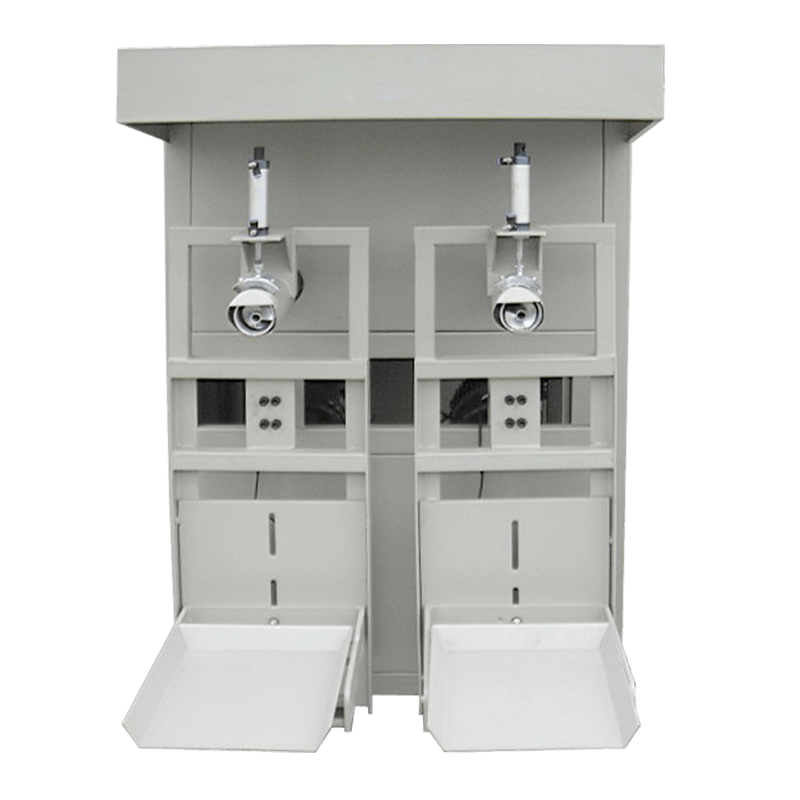
Our MP500N and MP500N2 automatic vacuum packaging machine is designed for both granules and powders, with a chamber cycle that suits medium-output food lines where shelf life and pack appearance matter as much as speed.
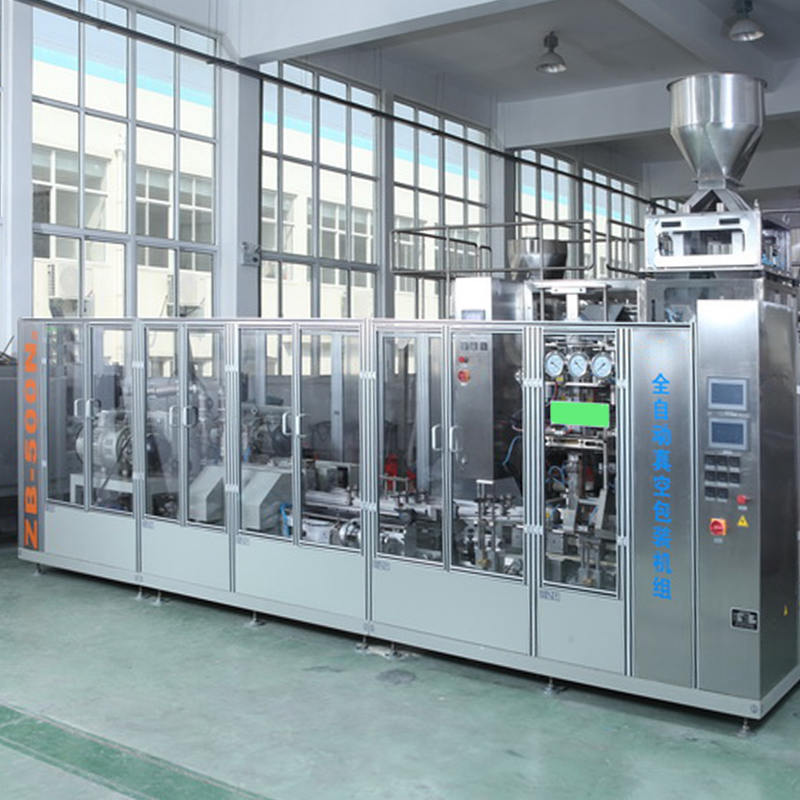 MP-500N/500N2 Automatic Vacuum Packaging Machine For Granules And PowdersPowdery material (e.g. coffee, yeast, milk cream, food additive, metal powder, chemical product)View Product →
Building a Complete Granule Packaging Line
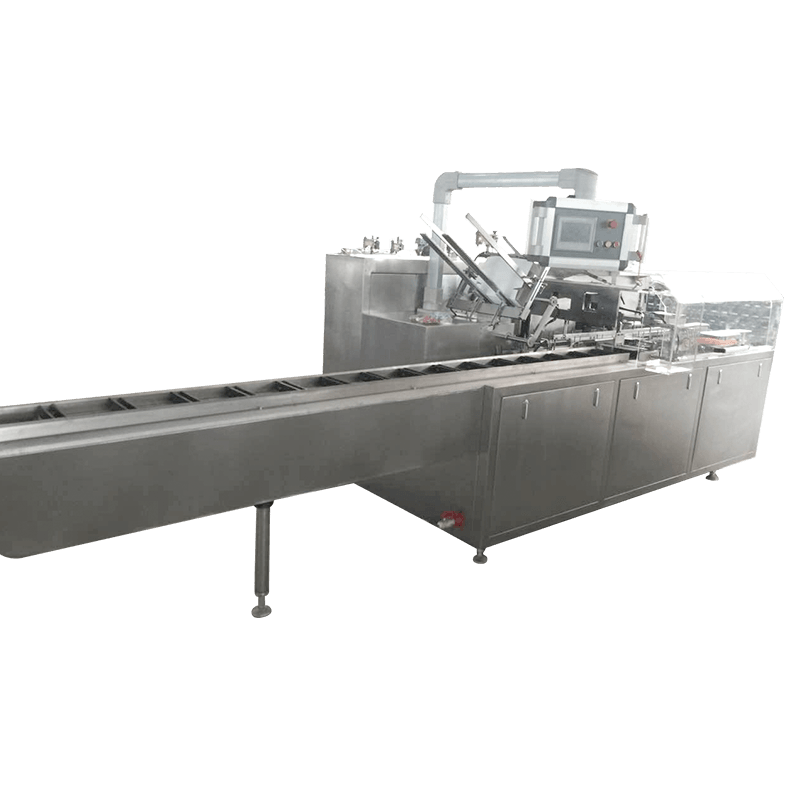
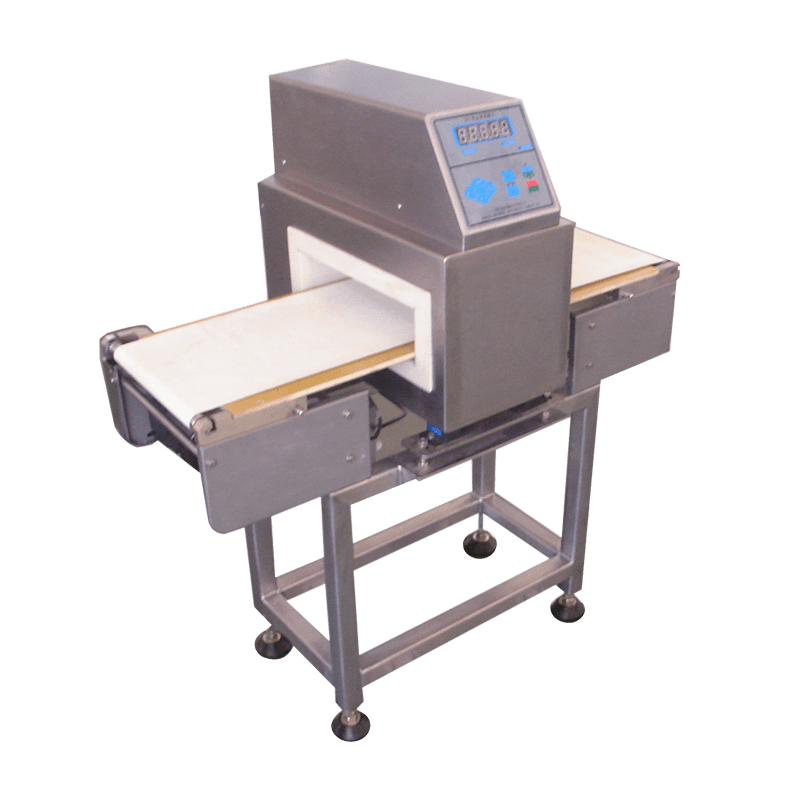
A single machine rarely stands alone. Upstream, a chain drive bucket elevator or pneumatic conveying system lifts material to the machine hopper without manual handling, which protects product quality and removes a labour-intensive step. Downstream, checkweighers verify pack weight, metal detectors screen for foreign objects, labeling machines and thermal transfer printers apply batch and date codes, cartoning machines build retail-ready secondary packs, and robotic palletizers finish the job on the shipping bay.
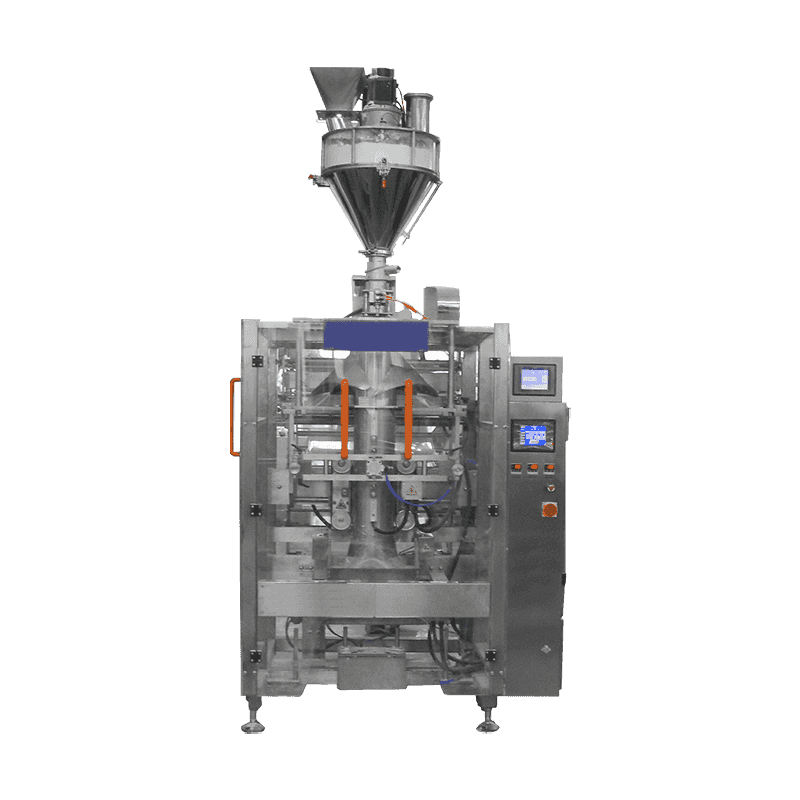
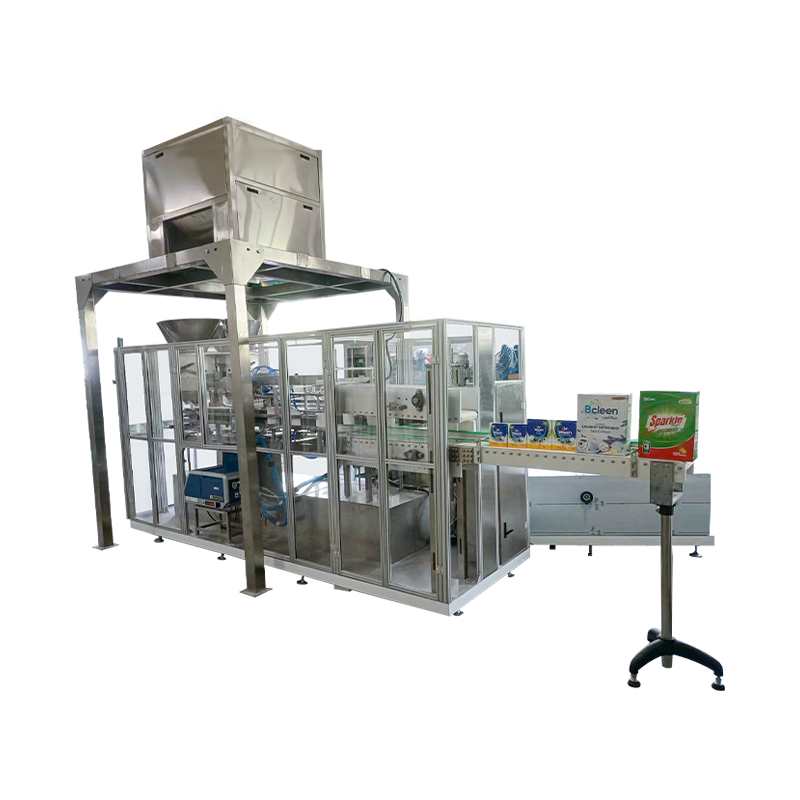
For producers who prefer to source the filling section as one integrated unit, our MP5000D, MP5000B, MP7300, and MP1100 integrated automatic granule vertical packaging machines combine dosing, bag forming, sealing, and control in a single frame, which simplifies installation and leaves more usable floor space for the rest of the line.
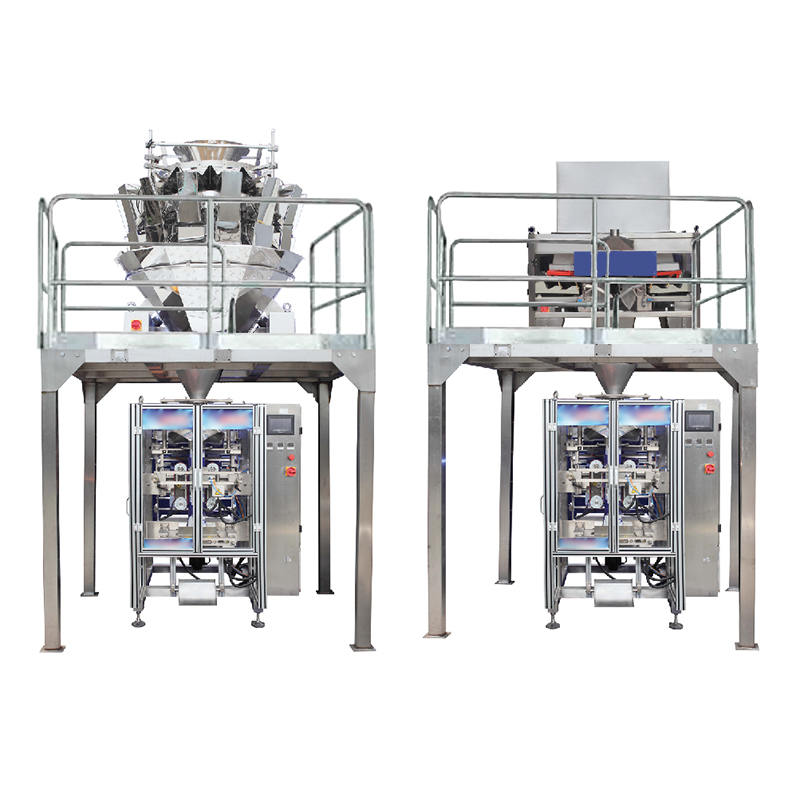 MP-5000D/5000B/7300/1100 Integrated Automatic Granule Vertical Packaging MachineMP-500N/500N2 Automatic Vacuum Packaging Machine For Granules And PowdersView Product →
Applications by Industry
Granule packaging machines are configured differently depending on where they are installed, even when the mechanical principle is identical.
- Food: salt, sugar, rice, beans, seeds, snacks, coffee, and dried fruit, usually on stainless steel machines with frequent cleaning cycles.
- Pharmaceutical: granules and pellets packed into sachets or pouches, with tight weight control, batch coding, and full traceability.
- Chemical: detergent, fertilizer, resin pellets, and additives, often in heavier packs with dust control and antistatic protection.
- General industrial: any product with predictable flow behaviour that needs a fixed weight or volume in a sealed bag.
Maintenance and Daily Checks
Most granule packaging machine problems start small and announce themselves early. A short daily routine prevents the majority of unplanned stops.
- Inspect the sealing jaws for residue and check the sealing temperature against the film specification.
- Empty and clean the dosing cup, screw, or weighing hopper at every product changeover.
- Verify bag weight on a calibrated scale at the start, middle, and end of each shift.
- Check film tension and the forming tube for wear, which shows up as wrinkled or off-centre seals.
- Listen to the vacuum pump and the drive system, since unusual noise usually precedes a failure.
Why Producers Work With Mach Packing
We manufacture granule packaging machines, powder packaging machines, liquid packaging machines, conveying systems, and the auxiliary equipment that surrounds them, from checkweighers and metal detectors to labeling machines and palletizing robots. That range means a single engineering team can take responsibility for the whole packaging flow instead of leaving you to coordinate several suppliers.
Every project starts with your product, your pack format, and your target output. If you would like to talk through a configuration, send us your material sample details and we will recommend the machine type, dosing principle, and line layout that fit your production realistically.
Frequently Asked Questions
What is the difference between a granule packaging machine and a powder packaging machine?
Granules are free-flowing particles that behave predictably under gravity, so they can be dosed with measuring cups, augers, or weighing hoppers. Powders fluidise, generate dust, and bridge more easily, so they usually need screw dosing, dust extraction, and tighter sealing control. Some machines, including certain vacuum models, are built to handle both.
How accurate is a granule packaging machine?
A well-maintained net-weight machine typically holds around half a percent to one percent of the target weight. Volumetric machines depend entirely on bulk density consistency, so their variation reflects the material rather than the machine.
Can one machine run several pack sizes?
Yes, within the range of its forming set and film width. Changing bag width usually means changing the forming tube and adjusting the sealing and cutting positions, which is a routine operator task on most modern machines.


 English
 Español
 عربى
عربى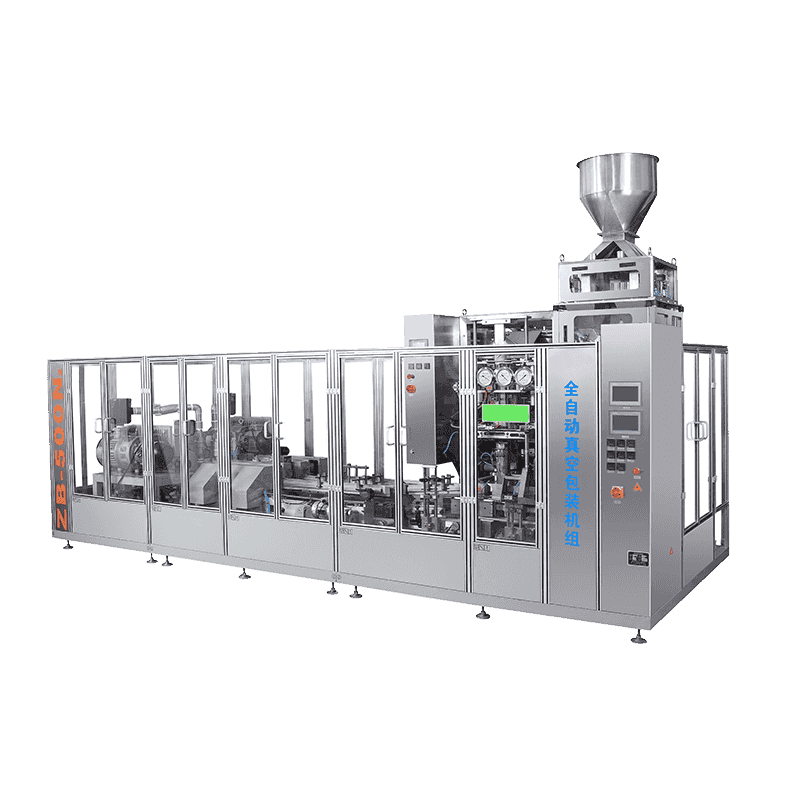


Contact Us